ERIC MICHAEL JOHNSON
_____________________________________________________________________________________________________

"If the misery of the poor be caused not by the laws of nature, but by our institutions, great is our sin."
- Charles Darwin
_____________________________________________________________________________________________________
Showing posts with label bonobo. Show all posts

Mar 24, 2009

Bonobos in the Garden of Eden

Our primate cousins could turn the question of human origins upside down.


Could the bonobo homeland also be the origin of our common ancestor?
Image: Cyril Ruoso / Time

In an interview with Dan Harris on Nightline, bonobo researcher Dr. Bila-Isia Inogwabini recently suggested that humans may have first evolved in the Western area of the Democratic Republic of Congo rather than in East Africa where most of the fossil evidence has been discovered.
“I really strongly feel that people may have evolved from this region,” he said. "It’s a big claim, yes, I understand, but I really think it is worth it to put it on the table."
Genetic evidence suggests that humans, bonobos and chimpanzees shared a common ancestor between 4.6 to 6.2 million years ago (mya). One population eventually became the genus Homo while the other, Pan, diverged again about 1.3 mya to become modern day bonobos and chimpanzees. What remains unknown is where and why this Pan-Homo split occurred that sent our species along such a different evolutionary path.

The vast majority of hominin fossils have been found in eastern Africa, in what is modern day Ethiopia, Kenya and Tanzania. The most reasonable assumption has long been that it was in East Africa, near the Rift Valley, where the Pan-Homo division took place. However, the earliest hominin fossil find to date, Sahelanthropus tchadensis, is between 6-7 mya and was found in in the central African country of Chad (about 2,500 km away). S. tchadensis was much more ape-like than later Australopithecines and is thought to have coexisted alongside our common ancestor with chimpanzees and bonobos.

This early Chad find is important considering that the fossil record is so sparse between 12 mya and 4 mya (the crucial period as far as we're concerned). The only representatives of this vast period after S. tchadensis was Orrorin tugenensis (6 mya from Kenya) an ape species that may have been partially bipedal, Ardipithecus ramidus kadabba (5.5 mya from Ethiopia) and Ardipithecus ramidus ramidus (4.4 mya also from Ethiopia). All of these species were much more apelike than the Australopithecines, which first appear in the fossil record 4.15 mya in Kenya and 4.1 mya in Ethiopia. An excellent timeline at hominin.net helps put these dates and the location of the finds into context.


Fossil map showing many of the hominin fossil discoveries throughout Africa.
Image: National Geographic

While Ethiopia or Kenya would seem to be the most likely candidates for the split between Homo and Pan, the fact that the earliest known hominin has been found in Chad has raised some questions about this. Writing in the journal Nature about how the discovery of S. tchadensis changes our understanding of early human origins, Brunet. et al state:
This suggests that an exclusively East African origin of the hominid clade is unlikely to be correct. It will never be possible to know precisely where or when the first hominid species originated, but we do know that hominids had dispersed throughout the Sahel and East Africa by 6 Myr.
Furthermore, Australopithecus bahrelghazali (about 3.6 mya) was also discovered in Chad, suggesting that there is a great deal of material still to be discovered in this region. Later hominin fossils have also been discovered in South Africa (such as Australopithecus africanus and Paranthropus robustus). This means that the distribution of hominins extends all the way from Chad to East Africa to South Africa. Interestingly, the nearest central point between all these locations is the Democratic Republic of Congo.

This brings us to bonobos, the species that Dr. Inogwabini has studied for many years. Bonobos are found only in the DR Congo and had their last common ancestor with chimpanzees about 1.3 mya. Emory University primatologist Frans de Waal has argued that bonobos haven't changed much in the 4-6 million years since humans, chimpanzees and bonobos shared a common ancestor.
"The bonobo may more closely resemble the common ancestor of all three modern species," De Waal says. "It's an important issue that's yet to be resolved."
Remarkably, many of these traits are shared by only one other extant species: humans. Regular bipedalism, face-to-face mating (requiring a more ventral orientation of the vagina), reduced limb and body proportions, reduced canines, greater breadth of diet, larger group sizes and reduced competition within groups; all of these traits are shared more closely with humans than chimpanzees. Anatomically, bonobos show more similarities than chimpanzees to the early hominin Ardipithecus (5.5 mya). This could mean that bonobos are closer to the ancestral population and that chimpanzees diverged in order to adapt to different environmental pressures. But it could also be that early humans and bonobos experienced convergent evolution based on similar environments. At this point the evidence to address these questions is thin.


Bonobos are the only primate, other than humans, that regularly walk upright.
Image: Unattributed

Unfortunately, fossils are unlikely to help. Rain forest soils are notoriously bad for fossilization. The bones will decay long before minerals can replace the organic material. Even in ideal conditions (such as arid or anoxic environments) fossilization is extremely rare. So there is a certain amount of "environmental bias" in the fossil record. Unless an organism had a large enough range to be living in the right location for fossilization to occur, there will be no record that they ever existed. This could mean that the hominin fossils we do have were from individuals after they had migrated to the far edge of their original range and that the really exciting evolutionary events occurred in Central Africa. If this is the case, then the reason we have so many fossils from East Africa isn't because that was the cradle of humanity, it's just because the conditions were right for fossilization. Unfortunately, without evidence to test this hypothesis it remains in the realm of mere conjecture.

One piece of evidence that makes me think bonobos and humans might have shared more than just a similar environment has to do with a region of DNA promoting the release of oxytocin. At the AVPR1A gene both humans and bonobos (but not chimpanzees) share a repetitive microsatellite locus that Elizabeth Hammock and Larry Young have shown to be important for cooperation, empathy and social bonding. It is far more parsimonious that chimpanzees lost this repetitive microsatellite than for both humans and bonobos to independently develop the same mutation.

So if I had to make my best guess, I would put my money on the Pan-Homo split occuring in the mosaic environments of Central Africa near DR Congo. I would also predict that this common ancestor would appear more bonobo-like than chimpanzee-like. We may never know the real answer. But, considering the exciting "hobbit" fossils discovered on the island of Flores, Indonesia, it may be possible for fossilization to occur even in the rain forest if conditions are just right. At this moment, somewhere in a cave near Lac Tumba in the Democratic Republic of Congo, our common ancestor with bonobos and chimpanzees may be lying in wait for the next intrepid explorer to unearth. If so it would be the anthropological find of the century. Our long search to understand human origins would finally be at an end.


[Read more →]
Bonobos in the Garden of EdenSocialTwist Tell-a-Friend

Mar 22, 2009

Nightline Highlights Bonobo Crisis

A new Nightline report travels to the war ravaged Democratic Republic of Congo to interview Bila-Isia Inogwabini, the World Wildlife Fund researcher who discovered an unknown population of nearly 2,300 bonobos. Considering that some researchers estimate there to be fewer than 10,000 bonobos alive in the wild, this discovery was hailed as a major development in the effort to save the species from extinction.

I was introduced to Bila a few years ago while working on my article Behind Enemy Lines for Wildlife Conservation. At the time he was just preparing his expedition to the Lac Tumba region of Western Congo. His team's findings were subsequently published in the Cambridge University journal, Oryx (subscription required).

Watch the Nightline report below:


For additional bonobo related posts see Bonobo (Re)Visions, Bonobos "Red in Tooth and Claw" and my interview with bonobo researcher Frances White.


[Read more →]
Nightline Highlights Bonobo CrisisSocialTwist Tell-a-Friend

Feb 6, 2008

American Journal of Physical Anthropology, 2008, 135(S46): 126


Career or Family?: Maternal style and status-seeking behavior in captive bonobos (Pan paniscus).


E.M. Johnson
Department of Biological Anthropology & Anatomy
Duke University

ABSTRACT:

This is the first study to show a trade-off between primate maternal style and status-seeking behavior. Maternal styles in non-human primates fall along two orthogonal dimensions: protectiveness and rejection, with protectiveness positively correlated with approaching, restraining, grooming and contact-making the infant and rejection positively correlated with breaking contact, leaving and rejecting the infant. These personality styles are comparable to styles identified in research on human psychology. Maternal behavior and status-seeking activities are not mutually exclusive and status-seeking mothers provide direct benefits to their offspring through intergenerational transfer of rank. High-ranking bonobo females have the highest frequencies of social grooming and grooming competition is positively correlated with dominance rank as well as with rank-related competition among lower ranking individuals. This study investigated two dominant bonobo females with nursing infants of the same age at separate captive facilities. A previous study at one of the facilities (Johnson 2007) determined that alliance formation among females was reduced as the result of matrilineal housing that included three full sisters. It was predicted that a more protective maternal style would be observed due to the reduced activity budget devoted to rank-related social grooming. 60 hours of video footage was analyzed detailing all mother-infant interactions and all social grooming bouts at each facility. The matrineally-housed mother showed significantly higher levels of protective infant care while the second mother demonstrated significantly higher levels of grooming time with conspecifics. This suggests that maternal style and status-seeking behavior involves shifting strategies for maximizing female fitness that are context-dependent.

Full Text (subscription required)


[Read more →]
American Journal of Physical Anthropology, 2008, 135(S46): 126SocialTwist Tell-a-Friend

Oct 16, 2007

Jane Goodall - A Personal Tribute

Primatologist and UN Peace Messenger at Duke University


Jane Goodall bridged the divide between two species.

Image: Hugo van Lawick

The primatologist and neuroscientist Robert Sapolsky once wrote that, when he grew up he wanted to be a mountain gorilla. Me, I wanted to be a chimpanzee. His inspiration was Diane Fossey, but I was always most interested in the work by that other cover girl of National Geographic. As I’m sure was the experience for many of us, Jane Goodall was the only scientist I had ever heard of when I was growing up (I wouldn’t discover Carl Sagan until much later). Her friendly manner and relaxed charm was a stark contrast to the cold and cerebral stereotype of Hollywood films.

So it was a great pleasure to finally hear her speak in person after a lifetime of listening to her voice from the old, tinny speakers of my family’s television. As one of the 300 speaking engagements she’ll make this year alone, Dr. Goodall addressed the Duke University campus with a message that was both a warning and an encouragement.

Covering a wide variety of topics -- from her childhood love of animals, to chimpanzee psychology, to industrial farming to global warming -- her presentation was a mixture of great challenges for this generation along with her own story of how she overcame personal adversity. However, I felt her greatest strength was in relaying the interrelated problems of globalization in such a way as to make it both accessible and revealing. She impressed upon the students and faculty in attendance that we privileged elites of the world were primarily responsible for the harmful effects imposed on the developing nations through our wasteful and insatiable consumer appetites. Since we insist on saving a dime for our coffee, another acre of rainforest is burnt in order to turn a profit. While we’ll offer billions of dollars to our allies for weapons of war, we’ll balk at microcredit programs that offer the greatest potential to raise families out of poverty.

However, she was confident that our generation would rise to the challenge. Through her Roots and Shoots program they’ve initiated a program to import shade grown coffee from the highlands of Tanzania that saves both the rainforest and offers poor farmers a living wage. Likewise, by following in the lead of the Grameen Bank (last year’s Nobel Peace Prize recipient), small loans are offering the villagers around Gombe an incentive to preserve their national heritage in a way that avoids the colonial attitude of earlier aid organizations. By explaining both the large scale problems as well as the small scale solutions, the unorganized mess of our global crisis was synthesized into a digestible whole.

It’s rare to have someone present a host of world problems that feel nearly overwhelming in their magnitude and yet to walk away feeling inspired and, dare I say it, hopeful. But such is the magic of Jane Goodall. I’ll still always remember her as she was in my youth, walking through the underbrush with her binoculars around her neck and blonde hair pulled back in a hurried bunch. The Gombe chimpanzees she introduced to the world (Flo, Fifi, Freud, Goblin, and, of course, David Greybeard) were my first introduction to a line of research that would eventually consume my thoughts. While now I want to grow up to be a bonobo, I’ll never forget the woman who first showed me how wonderful it is to be an ape.

UPDATE: Sheril at The Intersection offers her perspective on Goodall's message of hope in her latest post.


[Read more →]
Jane Goodall - A Personal TributeSocialTwist Tell-a-Friend

Oct 14, 2007

The Genetics of Politics

New study breaks the silence and suggests voter apathy could be explained by the genes.


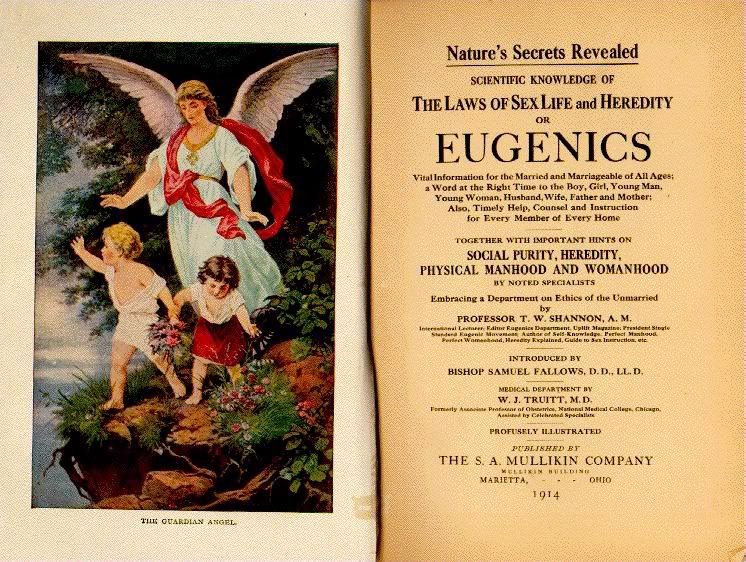
Front page from the 1914 American textbook Eugenics by Professor T.W. Shannon


Genetics and political science have had an ugly association in the past. Arguments that certain people were biologically “unfit” for the political process led to an official eugenics policy in the United States that continued up until the Second World War. This was based largely in prevailing views about racial inferiority.

For example, writing in 1907 Davis Rich Dewey notes (p. 163):

The white population of the South honestly believed that political activity and privilege was bad for the colored race. . . The inferiority of the negro was still held to be a demonstrated fact.

This “demonstrated fact” motivated the Jim Crow voting exclusion laws and anti-miscegenation legislation such as the Racial Integrity Act of 1924.

Given this history you’d suspect few political scientists would be willing to link the fields of genetics and politics, even if they’re clearly separated from the racist views of the past. However, political scientist James Fowler and colleagues have suggested just such a connection in a study they reported on at the American Political Science Association.

In trying to predict who will vote and who will stay home, researchers have tried in vain to find any patterns in age, gender, race, income, or level of education. This is a question of some urgency since fewer than 50% of US citizens regularly vote in presidential elections. In order to determine if genes played any role the researchers collected voting data on 442 identical and 364 fraternal twins and found that 72 percent of the differences in voting turnout and around 60 percent of the differences in political activity could be explained by genetics alone (though those numbers are disputed).

According to a review in the current issue of Scientific American:

If genes do in part control voting, a single gene is unlikely to be responsible—hundreds of genes are probably involved, suggests behavioral geneticist Robert Plomin of King’s College London. Fowler hypothesizes that because “we obviously did not vote in large-scale elections in the Pleistocene,” the drive to vote or participate in politics may be linked with genes underlying more ancient behaviors, such as innate dispositions toward cooperation. The search for any such genes in our primate relatives could help determine “whether we share the neurobiological underpinnings of cooperation or whether humans are unique in this respect,” Fowler adds.

This study doesn’t suggest that genetics can account for political differences (though another study tries to make that claim), merely a willingness to engage in the political process. As it happens, studies on such neurobiological underpinnings of cooperation in non-human primates have been undertaken, including with our closely related cousins the chimpanzees and bonobos.


Bonobos sharing cantaloupe

Image: David Eppstein

According to research by Brian Hare and colleagues published in the journal Current Biology (subscription required) bonobos were found to be more successful than chimpanzees in cofeeding trials that tested their emotional reactivity. Bonobos were shown to be consistently more tolerant, were able to cooperate more effectively and, as a result, ended up receiving a greater food reward than the more individualistic chimps. While it’s a far cry from representative democracy, what the bonobo study demonstrates is that neurobiological processes (and potentially even genetic differences) can go a long way in promoting cooperative behavior and social engagement.

So perhaps Fowler’s study isn’t as far fetched as it may initially appear. However, there are numerous additional factors that should be considered before throwing up our hands and blaming our faulty genes. For example, the International Institute for Democracy and Electoral Assistance has demonstrated that since WWII Western Europe has had the largest voter turnout in the world while North America has had the third lowest. Would anyone seriously suggest that genetic factors account for this difference? Certainly higher education standards, a news media that informs rather than provokes and greater worker participation in collective bargaining play some role. Understanding genetic factors can provide some interesting insights into political motivations but, like those who challenged injustice in our nation’s past, in order to turn our broken election system around we’ll need to follow our bonobo cousins and work together to achieve a larger reward.


[Read more →]
The Genetics of PoliticsSocialTwist Tell-a-Friend

Oct 11, 2007

Evolutionary Lap Dance

Study suggests women display sexual cues during estrus


Lap dancers earn larger tips when men sense fertility


In my earlier post, Eye of the Beholder, I pointed to new research showing that women are most attracted to individuals other than their partners while in estrus, the most fertile period of a woman’s menstrual cycle. Their eyes betrayed their attraction to others even under controlled settings. Now it seems that estrus causes men’s eyes to widen as well.

Publishing in the journal Evolution and Human Behavior (pdf), evolutionary psychologists Geoffrey Miller, Joshua Tybur and Brent Jordan collected data on the tips received by lap dancers who were currently taking birth control and those who were naturally cycling. Those dancers who were at their most fertile period received significantly more tips than both dancers on birth control and those at other points in their cycle.

As the authors wrote in their study:

When women and men interact intimately over the course of several minutes through conversation and body contact, women apparently either “signal” or “leak” cues of their fertility status, and these cues influence spending patterns by male consumers. These results argue against the view that human estrus evolved to be lost or hidden from males.

However the study has several limitations, as the authors readily admit. The sample size included only 18 individuals which could result in “false positives,” or finding significant differences where there wouldn’t be in results from a larger population. Secondly, the tip earnings and cycle phase were self-reported by the dancers themselves. Knowing which phase of the cycle you’re in can be difficult to determine (or so I’ve been told) and any mistaken estimates are further compounded when the sample size is so small.

Nonetheless, it would be remarkable if women didn’t show some indications of their reproductive status during their peak of fertility. All female mammals display distinct behavioral and physiological cues during their fertile period that increase their reproductive success as a result. For example many primates, including our closely related chimpanzee and bonobo cousins, will develop large estrus swellings during their fertile period and will be more likely to approach the males they find desirable. Rhesus macaque females will vigorously court males during estrus, even using physical aggression if males reject their advances. Also, lionesses will actively seek out up to 100 matings per day with multiple individuals during their one-week of peak fertility (something that was edited out of The Lion King).

Bonobo sexual swellings coincide with greater sexual interest in males and females

Image: Vanessa Woods

This study doesn’t suggest that the dancers were more attracted to their customers while in estrus (or attracted to them at all), merely that males could detect something irresistibly alluring, more so than during other times, and responded with their wallets.

Our society typically views women’s sexuality as either shameful or reserved for men’s enjoyment (as I’m sure the women in this study know all too well). However, in an ironic twist, this tentative evidence of estrus signaling among lap dancers emphasizes the personal empowerment inherent in the evolution of female sexuality. For thousands of generations those women who displayed a healthy sexual desire during their most fertile period were ultimately more successful in the evolutionary dance. This legacy remains visible today, even in women who want nothing more from the males in their vicinity than a decent tip.

Reference:

Geoffrey Miller, Joshua M. Tybur, Brent D. Jordan (2007). Ovulatory cycle effects on tip earnings by lap dancers: economic evidence for human estrus? Evolution and Human Behavior. doi:10.1016/j.evolhumbehav.2007.06.002


[Read more →]
Evolutionary Lap DanceSocialTwist Tell-a-Friend

Sep 6, 2007

Sex for a Handshake

Bonobo research continues despite Congo unrest.


Vanessa Woods and friends

Researchers have gone to the Democratic Republic of Congo to study the social behavior of bonobos -- a close relative of the chimpanzee -- in the Lola ya Bonobo Sanctuary in Kinshasa.

Vanessa Woods, an author and a participant in the study, will be posting daily updates at http://bonobohandshake.blogspot.com.

"We're always comparing ourselves to chimpanzees, but they're only half the picture," said Woods. "Bonobos and chimpanzees are so opposite in many ways, that we really need to understand bonobos if we're ever going to understand ourselves."

Woods and her colleagues from the Max Planck Institute in Germany will look at cooperation, play behavior and altruistic characteristics in the primates.

"A lot of our experiments look silly, like when I throw a bright red soccer ball back and forth, or wave a red porcupine around. But a lot of these games help us understand the way bonobos think. Are they as obsessed with objects as we are? Are they scared of new things?"

Bonobos are smaller than chimps and live in female-dominated societies. They are widely known for the prominent role that sex plays in conflict resolution.

Because the researchers are studying psychology, they can observe bonobos in the unnatural setting of a 35 hectare forest reserve in Kinshasa.

Source: Mongabay.com


[Read more →]
Sex for a HandshakeSocialTwist Tell-a-Friend

Aug 31, 2007

Bonobo Decides on Names for Swans

An ape is showing researchers just how smart primates can be.


Panbanisha, a bonobo at the Great Ape Trust in Des Moines, has given names to two trumpeter swans nesting at the center. It's an achievement researchers say shows how important collaboration is to learning.

The ape trust focuses on helping primates communicate through computers and symbols.

The latest project began in the spring when the swans were released on the trust's lake. It took months of work to motivate Panbanisha to name the birds.

Researchers made references to the swans while communicating with the bonobo -- showing the ape they were interested in giving them names. They displayed pictures of the swans, played videos of them and took Panbanisha on a walk to find them.

Abstract symbols were developed to help the bonobo distinguish between the three male and female names under final consideration.

And finally this month, Panbanisha made her choices: Morgan and Olivia.

Source: Monkeys in the News


[Read more →]
Bonobo Decides on Names for SwansSocialTwist Tell-a-Friend

Aug 18, 2007

Bonobos "Red in Tooth and Claw"

Bonobos are not totally peaceful, but reports have been greatly exaggerated


John Hawks has a great review of the commentary following Ian Parker’s New Yorker article "Swingers" on bonobos as well as Frans de Waal’s response in eSkeptic. I’ve previously commented about this issue here and here. However, I disagree somewhat with my fellow anthro blogger that de Waal is accusing Parker of having a political agenda. De Waal points out that conservative pundits picked up on this article in order to, following Parker’s phrase, “use the species as a stick to beat” their ideological drum. What de Waal points out is that Parker was merely “sexing up” his article to raise a little controversy.

Parker presented his trip as a fact-finding mission that had unearthed revolutionary new insights. His message was that bonobos are killer apes, just like their cousins, the chimpanzees. The animal kingdom remained “red in tooth and claw,” as it ought to be.

Yet, the most striking cases of bonobo aggression that he reported have been known for decades, and actually didn’t come from the natural habitat, even less from first-hand observation by our brave explorer.

Challenging a widely held view, even without anything dramatically new to report, is a standard journalistic hook in order to generate audience interest. Whether Parker intentionally chose this tactic or whether it just seemed to be the most exciting way to tell the story isn't all that important. It was a beautifully written piece on the difficulties of fieldwork which ultimately contained flaws about bonobo social behavior.

Parker quotes primatologists Gottfried Hohmann and Craig Stanford (two researchers I greatly respect) in such a way that it implies de Waal has been wrong in his interpretations since he’s never done field work himself. Stanford had some of the most critical statements but, since he’s never done fieldwork with bonobos either, these aren't as relevant as Hohmann's. However, while Hohmann has published some exciting field results showing that bonobo behavior could be more flexible than previously thought, his findings do not contradict de Waal’s interpretations.

For example, Parker takes issue with de Waal's statement that:

“Who could have imagined a close relative of ours in which female alliances intimidate males, sexual behavior is as rich as ours, different groups do not fight but mingle, mothers take on a central role, and the greatest intellectual achievement is not tool use but sensitivity to others?”

Taking each point individually, compare that with the following statements from Hohmann's publications:

1. “Aggression by males against females was rare and was almost never followed by mating between aggressor and target. Female aggression against males occurred frequently but appeared to be independent of mating behaviour.” Behaviour (2002).

2. “Why females of the two Pan species differ in their [genito-genital] displays of social status remains a challenge for future research. The finding that bonobos perform this behaviour so regularly indicates that social status is an important issue for the females of this species. Because of their frequent use, dyadic performance, spatial variability and behavioural plasticity, we suggest that genital contacts can be used to investigate the quality and dynamics of social relationships among female bonobos.” Animal Behavior (2000).

3. “Bonobos show an opportunistic and promiscuous mating behaviour, even with mates from outside the community.” Proceedings: Biological Sciences (1999). Also see Primates (2001) for a short communication involving tolerance of strangers.

4. “The lasting bonds between mothers and sons may be a substitute for male coalitions serving rank acquisition in chimpanzees.” Behaviour (1999).

Other than de Waal's final comment about intellectual achievement (which is a value judgment, even though bonobo empathy has been shown to be greater than chimpanzees) the two researchers don't differ substantially on these points. Parker didn't include this common ground but opted to create a wedge between Hohmann and de Waal. This opened the door for political pundits to declare victory that the bonobo "myth" had been disproved (which shows what standard of evidence they embrace).

However, it's important to point out that new field data has provided more complexity to the social lives of bonobos (and of chimpanzees as well). The excellent book Behavioural Diversity in Chimpanzees and Bonobos (of which Hohmann was a co-editor) shows how different environmental conditions bring out different sides to these species. An in depth review of this book can be found here.

Fortunately, and with all criticism aside, any discussion about bonobos can only aid in the conservation of this critically endangered species as it will activate their strongest base of supporters and bring them to the attention of others who may have never known there was more than one "chimpanzee." I also salute Parker’s dedication for taking such an arduous journey to watch bonobos personally, as brief as that may have been.

However, John Hawks is absolutely correct that Parker's misrepresentations are minor compared to some other blunders in science journalism. It's important for researchers to continually challenge those interpreting scientific results for the public so that such misrepresentations will be minimized.

Currently Gottfried Hohmann and Frances White are conducting field work in the region (I conducted an interview with Dr. White earlier about bonobo behavior). It will be exciting to learn what new insights are discovered about our evolutionary cousins.


[Read more →]
Bonobos "Red in Tooth and Claw"SocialTwist Tell-a-Friend

Aug 9, 2007

Bonobos and the Politics of Human Nature

Frans de Waal responds in the ongoing debate over human destiny


As I wrote earlier in Bonobo (Re)Visions, Ian Parker’s “exposé” in the New Yorker was beautifully written but wrong on many levels. Now the straw man who Parker claims to have torn down, primatologist Frans de Waal, answers his polemical critic with a new piece in eSkeptic.

What was particularly interesting in the fallout from the original article was how widely the New Yorker piece was referenced by conservative pundits (who often view the magazine as synonymous with the Communist party). Parker turned his romp through the jungle into an attack piece that conservatives could rally behind - if bonobos aren’t as peace loving as we thought then we must be destined to be violent and patriarchal.

Dinesh D’Souza, the Hoover Institution Fellow who joined the Jerry Fallwell loony bin when he blamed 9/11 on liberals, wrote on his blog that

Supposedly bonobos are bisexual apes who engage in incessant and indiscriminate sexual activity as an alternative to power struggles and male wars of domination. I'm surprised the Democratic Party hasn't changed its symbol from the donkey to the bonobo.

Well, maybe the liberals should put their bonobsession on hold for a while... de Waal got it mostly wrong.

Quite obviously D’Souza and the other right-wingers were all too quick to embrace the “human tendency to distort evidence to suit our prejudices” that they were condemning in others. As eSkeptic states in the introduction to de Waal’s article

The spindoctoring of science for political purposes, of course, is a long and dishonorable tradition, so nothing new here in that regard. However, it is interesting that so many people wish to deny the undeniable relationship between humans and chimps, and at the same time cannot seem to help finding political meanings in primate behavior that supports either a liberal or conservative agenda.

Bonobos and chimpanzees are equally related to humans (between 98.6% and 99.4%). This is because we shared a common ancestor with both approximately 6 million years ago. The ancestors of bonobos and chimpanzees split off from each other roughly 3 million years later. Behaviorally we share aspects with both: male coalitions and border raids in chimpanzees, female coalitions that reduce male coercion in bonobos, brutal dominance competitions in chimpanzees and cooperative interactions for a common goal that are more prominent in bonobos.

Anatomically we share more in common with bonobos, including the more frontally located clitoris and vulva that allows for face-to-face mating. We also share bonobo’s greater penchant for using sexuality for nonreproductive purposes and in partner combinations not strictly approved of in the Bible.

That we’re equally related to both species, and that we find similarities with both, is exactly what you would expect. However, it says nothing about what we’re destined to be. Biology is not destiny, whether you’re arguing as a liberal or a conservative. However, biology does provide a framework that our destiny lies within. We’re not going to create a society based on selfless cooperation any more than we are of selfish individualism. The reason is we’re apes, not termites or cats. What the differences between chimpanzees and bonobos represent, however, is that what previous generations thought was outside of that framework is now safely tucked within. The politics over human nature will undoubtedly spin on in the frantic whirlwind of soundbytes and personal attacks. Meanwhile the gears of science will continue to operate, slowly separating the solid evidence from the rubbish that the pundits expel.

For more on this see my post Bonobos "Red in Tooth and Claw".


[Read more →]
Bonobos and the Politics of Human NatureSocialTwist Tell-a-Friend

Aug 6, 2007

Women of Influence - Sue Savage-Rumbaugh

From today's Des Moines Business Record:


Dr. Sue Savage-Rumbaugh is one of the first scientists on earth to study how bonobos, a species of chimpanzee, use language among themselves and other species, including humans. She conducts her seminal research for the Great Ape Trust of Iowa on a 230-acre Des Moines compound.

"They don't have the same kind of voice box humans have, so we had to develop another way for them to communicate," Savage-Rumbaugh said.

The solution she crafted is called a lexigram - a board covered with 384 symbols, each representing a word. The bonobo can speak by pointing to symbols that substitute for words he or she wants to convey. Some symbols represent actions or what can be touched or seen, like burritos, other bonobos, water, or Savage-Rumbaugh herself. But other symbols stand for moods or concepts such as "yesterday," "secret" and "pretend."

"They can now use over 400 symbols and are capable of understanding far more auditory words than that," Savage-Rumbaugh said. "They can signal that they are happy or sad."

The bonobos can form complete sentences by pointing to the symbols. When she and her former husband began their research, no one knew whether chimpanzees were capable of the linear logic required for sentences.

Savage-Rumbaugh met her husband through research. Although she and her husband have been divorced for about 10 years, they continue to work on research projects together.

"Early on in her work as a scientist, she was often met with skepticism," the renowned scientist Dr. Jane Goodall wrote in her letter nominating Savage-Rumbaugh as a Woman of Influence. "Nevertheless, she was able to overcome this."

Just like humans learning a second language, apes find it easier to learn the symbolic language when they start studying as children rather than adults.

Savage-Rumbaugh joined the Trust after 30 years with Georgia State University's Language Research Center, where she worked with eight bonobos. She brought that group with her to Iowa's Great Ape Trust. When the facility is completed, it will be the largest in North America to house bonobos, chimpanzees, gorillas and orangutans.

Savage-Rumbaugh is currently working on two books about how mother apes communicate with infants and how apes make and use tools. Goodall praised her research for showing that the tools apes fashion are very similar to those made by prehistoric humans.

"Understanding how apes acquire communication skills helps humans realize how we become what we are in terms of personality, character and ethics," Savage-Rumbaugh said.


[Read more →]
Women of Influence - Sue Savage-RumbaughSocialTwist Tell-a-Friend

Jul 29, 2007

Bonobo Conservation

An Exclusive Interview with Primatologist Frances White


Frances White (second from right), Bila-Isia Inogwabini (third from left) and team in DR Congo.

Dr. Frances White is an Assistant Professor of Anthropology at the University of Oregon. She was featured in the PBS Special: The Last Great Ape. This interview was featured in my Wildlife Conservation article Behind Enemy Lines. Part 1 of this interview can be viewed here.


You last visited the Lomako field station in 1998. Historically, what have conditions been like for bonobos?


It’s really fluctuated over time in terms of the impact on the animals so, when I first went in the early 80s, it was at low point for the economy. So in the 70s what had happened was that the economy was actually improving, and that was bad for the pygmy chimps. This is because it was increasing the amount of money and resources and guns and shotgun shells that were making their way into the hands of either ordinary people or soldiers who were going along the river shooting elephants or animals for bush meat or animals for trade.

In the 80s there was only one shotgun in the area and the person who had it couldn’t get shells so there was very little hunting. There was some snare trapping, but there was very little. But there was also the fact that the researchers were there fairly continually, and having primatologists present does an enormous lot to protect the animals. So people wanted to keep us there and they knew we wouldn’t stay if the animals were disappearing. So physically being there through the 80s and through the 90s was really good.

I understand that there were approximately 10,000 bonobos alive in the wild prior to the civil war, is that the correct figure?

I don’t know. I think they’re often very much guesstimates, depending who sat down and tried to work it out based on aerial pictures of habitat or estimates from different areas. I would say that sounds reasonable to me.

However, they are extremely endangered. So how would that compare to other endangered species? In other words, how endangered are they?

I would say they’re highly endangered because they’re so big, which makes them long lived and very, very, very slow to reproduce. So any impact to the population is going to be enormous and extremely slow to recover. So if a female doesn’t have babies until she’s thirteen years old, or a male doesn’t reproduce until he’s twenty, that’s a population that’s extremely susceptible to being completely wiped out.

Even ignoring the whole bush meat trade questions, any habitat disturbance is going to take them out first because they’re specialist frugivores and they’re always the first ones to go when habitats are disturbed. And, of course, when you take out the specialist frugivore, the forest is never going to regenerate, so you essentially lose the rain forest too. After the trees there have died they won’t be replaced because bonobos are the main fruit dispersers.

So what, in your view, should be done to protect bonobos?

Well, the big problem compared to all other apes is that they only occur in the Democratic Republic of the Congo. So they’re restricted to one country and that means that this one country’s policy of preserving them is the only thing determining whether or not they survive. So unlike other species that go across country borders, bonbos, or pygmy chimps, are found only in the Congo. So it has to be a one country solution to the problem. And that’s, of course, a country where protecting a wild ape is relatively low on its priority list, given all the civil war problems and all the economic problems in the country.

So I think that an international effort has to be involved to get them protected, especially ways that natural areas can be preserved. The Lomako area, where I work, is not a national forest, it is not protected in any way, and we’ve tried many times, and at times have gotten fairly far along with trying to get the area protected, but it isn’t protected in any way. So those sorts of things can happen with international support, and things like debts and nature swaps and other sorts of international cooperative agreements that can make it to the country’s benefit to help preserve the species.

I know Rwanda has made great strides in protecting gorillas because it found an economic benefit involved. Congo hasn’t seen that benefit so far?

No, and they won’t. It’s a very different situation. Ecotourism is not going to work for pygmy chimps in the same way that it works for gorillas and can work in some areas for common chimps, because of the way their habitat is so isolated in the interior of the country. It’s very hard to get to and very hard to protect tourists when they’re there. When I was in the field we had a National Geographic crew that was going to come in and they couldn’t get all the way to the site so they gave up. We’ve had soldiers try to come in at various times to check papers or check what was going on, and they would also give up and go back and not get into the site. So the isolation which can also be a benefit can also prevent solutions such as ecotourism. So it’s a very different situation from gorillas.

When do you hope to return to the Lomako Forest?

We’re hoping not next year but the year after, but its funding contingent as always. So we’re hoping to have a team come back soon, if we can get the funding.

[Editor's Note: Frances White recently received a grant and is presently in the Democratic Republic of Congo continuing her research.]


[Read more →]
Bonobo ConservationSocialTwist Tell-a-Friend

Jul 28, 2007

Bonobo (Re)Visions

Commentary over the New Yorker article distorts and misrepresents the evidence.


As expected, the apologists for unreason who promote Intelligent Design have jumped on the recent article in the New Yorker about bonobos. This inspired me to write at more length about the article since this is a species I've studied closely for the last two years. Denyse O'Leary at Uncommon Descent uses the article to proudly declare that "Apes R Not Us, and we have to get used to it."

First off, even if bonobos turned out to be the most vicious beasts ever to be described by humankind it wouldn't change the fact that we share between 98.6% to 99.4% of our DNA with the genus Pan (the latter figure is based on genes responsible for brain tissue). We are apes, every last one of us hairless fools.

Second, while the popular view of bonobos has sometimes exaggerated their peaceful characteristics, the New Yorker article is being touted as though the reported bonobo social life has been a scientific fraud. As O'Leary states at her primary blog:


all along primatologists have had an agenda to try to prove that humans are not condemned to be brutes because bonobos are, like, nice.

There's a big difference between determining that popular misconceptions are incorrect and claiming that scientists are fabricating evidence. Gottfried Hohmann has been working for many years to try and uncover the mystery of the elusive bonobo. As reported this year in the journal Nature in reference to Hohmann's research:

Whereas violent encounters are the norm in the chimp society, conflicts such as that observed at Lomako are rare in bonobos. Perturbations to bonobos' social order are generally defused through sexual acts, often in homoerotic encounters between females.

There is a distinct difference between chimpanzee and bonobo social behavior, in the field and in captivity. As highlighted by bonobo expert Frances White and discussed in my earlier article, unrelated bonobo females will form cooperative partnerships to defend against aggressive males. This is unheard of in chimpanzees. Furthermore, it should be noted, that aggressive bonobos are positively timid when compared to chimpanzees in full battle mode.

However, the New Yorker article ignores this aspect of bonobo sociality to set up an ad hominem mode of argument. By attempting to show that Frans de Waal (who hasn't done field work with bonobos and has never claimed to) exaggerated bonobo cooperation they imply that such cooperation may not exist. This rhetorical approach may have worked with some of the more uncritical folk at Uncommon Descent, but you could build a monument with the crates of bad argument and misinformation that they employ on a regular basis.

For example, the New Yorker article makes a point of noting that captive bonobos could be more promiscuous than wild bonobos. Citing Craig Stanford, a primatologist I greatly respect:

“Stuck together, bored out of their minds—what is there to do except eat and have sex?”

However, if this were the case why wouldn't captive chimpanzees be doing the same thing? When you compare captive chimps and captive bonobos you find striking differences. But, assuming that captive animals are therefore bad examples, why would the New Yorker then use a captive example to suggest bonobos are just as violent as chimpanzees?

. . . at the Planckendael Zoo, near Antwerp. “I once saw five female bonobos attack a male in Apenheul, in Holland,” he said. “They were gnawing on his toes. I’d already seen bonobos with digits missing, but I’d thought they would have been bitten off like a dog would bite. But they really chew. There was flesh between their teeth.

Couldn't one respond to this anecdote by saying:

“Stuck together, bored out of their minds—what is there to do except eat and fight?”

I'm very pleased that the New Yorker has chosen to highlight bonobos and in general I think the article was very good. However, uncritical readers may take the author's approach of pushing controversy to attract attention (a tactic the Intelligent Design crew knows only too well) as demonstrating more than it has.

As more evidence comes in more will be known about our other evolutionary cousin. However, there is no disagreement among primatologists that bonobos are a unique species with characteristically unique social interactions, even among those who think the distinction has been exaggerated. As the New Yorker article highlighted from those who have spent the most time in the field:

“With bonobos, everything is peaceful,” Takeshi Furuichi, a Japanese researcher who worked with Kano at Wamba, told me. “When I see bonobos, they seem to be enjoying their lives. When I see chimpanzees, I am very, very sorry for them, especially for the high-ranking males.”
To paraphrase my hero T.H. Huxley, I only wish I was more closely related to either of these species than I am to the ignorant apes over at Uncommon Descent.

Update: Frans de Waal has responded to the New Yorker article at eSkeptic. I discuss how bonobos highlight the politics of human nature at The Primate Diaries.


[Read more →]
Bonobo (Re)VisionsSocialTwist Tell-a-Friend

Jul 27, 2007

Bonobo Behavior

An Exclusive Interview with Primatologist Frances White

Frances White is one of the world's leading experts on wild bonobo populations. She recently returned from the Democratic Republic of Congo where she was carrying out her field research. The following is an interview I had with Dr. White in preparation of my article "Behind Enemy Lines" in Wildlife Conservation magazine. Part 2 of this interview can be seen here.

Well, let me start with, what got you interested in bonobos?


Oh, my goodness. That’s a long time ago. I started as a PhD student at Stonybrook interested in large mammals, but the only large mammals I could work with at Stonybrook were primates. So it started quite by accident. But having heard the early stories about what was going on with the species, especially the relationships among the females and the way that when you first contact the group the males all run away and the females sort of band together and stay (which is the opposite of what common chimps do) was extremely fascinating. So the hints about differences in social organizations really piqued my interest.

And these stories you heard about bonobos, did they show themselves in the field?

The first site I ever saw of them, my very first contact with pygmy chimps was looking up onto two females who were GG-rubbing. That was the first thing that I ever saw and that does kind of influence what you think about a species, watching this female-female same-sex behavior. It was clear right from then that there was something very different going on and it really piqued my interest because these are basically then cohesive, cooperative, unrelated females which is so unique among primates.

A lot has been made of the non-aggressive society that bonobos live in, relative to other apes.

Well, they’re not free of aggression. I would say that’s not true. I have seen knock-down, drag out fights. I’ve seen males especially aggressing against other males, I’ve seen males aggressing against females. It’s relatively rare to see female against female aggression, but there is a little bit of it. Females are subordinate to males, it’s male dominant and males win in single fights. Its what’s called a dyadic relationship. With a single male and a single female the female won’t win but coalitions of females can win against males. So that’s not what we would call a female dominant situation.

Coalitions which don’t form in chimpanzees.

That’s right, those coalitions don’t form with chimpanzees.

Unlike chimpanzees, bonobos are a female-bonded society. Could you describe this difference?

Sure. The core of the party are cohesive females. And the females, if they split off from each other will stay in contact and if they find a food patch they’ll call in other females. Among males you see more individualistic strategies, that of competing with other males rather than being a cohesive male-bonded society. So if you just look at the social organization, at the grooming patterns or friendly patterns in any form, you’ll see far more female-female friendships and very few male-male friendships and a great deal of tension among males.

Why is it significant that female-bonding occurs between non-relatives?

Because that’s very unusual among primates. Female-bonding, as we use it in a general term is a typical bonding pattern among monkey species. And in monkeys the female bondings are among relatives. Evolutionarily it makes sense that if you’re going to help someone, you help a relative. So that female bonding is based on female relatives. So it was thought very strongly that you do not get cooperative groups of unrelated females. So the fact that pygmy chimps are cooperative females and are unrelated to each other is really unique. It’s also really important when you think of human evolution in terms of showing the range of behaviors that are possible.

Bonobo sexual behavior has been described as “pan-sexuality” and is with all members of the group. Is this the case?

Right, with all members of the group. Although, you have to be careful, because although females will mate with all males its not just mating with all males indiscriminately or for no reason. Females tend to get choosier around ovulation. So it’s not that they’ll mate with anyone and it doesn’t matter who, that’s not true. Mating is used for many different reasons. So, they can get choosy or even form consortships where a female will leave the group and go off with one male when she’s close to ovulating. Also, mating can happen just in response to male aggression. So you get sexual coercion, where males aggress against other females, females mate with them and it calms the male down. Plus you have mating under tense situations, males will go and try to get ahead of a group of females and then males fight to protect the food patch and when the females arrive they will have to mate with the male who’s won to get into the tree. So you’ll see an awful lot of mating an awful lot of the time but it happens for many, many different reasons. It’s not just indiscriminate. There are many behavioral strategies that are solved through sexual behavior.

From your own research and your own interest in bonobos, how can learning about bonobos teach us about our own evolution?

Basically, if we go back to Sarah Hrdy’s original book [The Woman That Never Evolved] that was written before a lot of the pygmy chimp stuff was done, about how human evolution is sort of restricted by this idea that females are less cooperative than males, pygmy chimps basically say that this is not the case. Female cooperation among non-relatives is well within the realm of the suite of behaviors that could be shown by a human ancestor. I think the thing that is most important to me in terms of thinking about human evolution, is that it shows the variation that’s possible.

We know that modern chimpanzees and pygmy chimpanzee populations vary enormously from each other. So the Wamba studies show very different things from the Lomako studies, and that’s all very much in the range of what pygmy chimps can do. We know that when we look at modern human populations, the range of modern societies, there are everything from monogamous societies to polyandrous societies to polygynous societies. We know that human beings are very, very broad today and we can relate some of the variation back to ecology.

Given the variation we see in modern humans, to me it says that there was no single ancestral human social system. That humans, like apes, are polymorphic in their social behavior. So the behavior can be related to the ecology in an area, and given what we know about human evolution, about how it spread from Africa throughout Asia, I would expect human social systems to be extremely polymorphic, extremely variable between different populations. So it removes this idea that you have one ancestral social organization and, in fact, expands it to include a really wide range of different social systems depending on local conditions.

So the jury on human nature is still out.

(Laughs) Yes.

Part 2: Bonobo Conservation


[Read more →]
Bonobo BehaviorSocialTwist Tell-a-Friend

Feb 26, 2007

American Journal of Physical Anthropology, 2007, 132(S34): 137


Lack of inbreeding avoidance and reduction of alliance formation in matrilineally-housed bonobos (Pan paniscus).

E.M. Johnson
Evolutionary Anthropology Graduate Program
Washington State University

ABSTRACT:

Wild bonobo females transfer at sexual maturation into groups without kin. Non-related females perform GG rubbing and grooming to form alliances, and females may mate indiscriminately without risk of incest. The present study investigated social dynamics of a captive bonobo group with a matrilineal core: three adult sisters, their offspring, and an unrelated adult male. It was predicted that these females might demonstrate reduced alliance formation with one another as measured through time spent in proximity and GG rubbing, and that incest might occur because females were housed with their sister's adult sons. 79 hours of 10-minute focal animal samples were collected at San Diego Wild Animal Park in January and June 2006. GG rubbing was absent between sisters, as well as between mother-daughter pairs. Maternal females divided their time equally between their sons (28% of total focal observation time) and their sisters (27%). The largest percentages of total grooming time were between the dominant maternal female and the unrelated male (19%) and between the lower ranking mother and her son (17%), suggesting that alliances were strongest between male-female pairs. Adults sons of two of the sisters formed extended sexual relationships with their own aunts (n1=22, n2=16). Sexual interactions also occurred between males (n=8 bouts), father and daughter (n1=6, n2=4) and brother and sister (n1=12). These findings suggest that matrilineal groupings result in reduced sociosexual interaction between females, and that female bonobos may lack behavioral incest avoidance mechanisms for males other than their own sons.

Full Text (subscription required)


[Read more →]
American Journal of Physical Anthropology, 2007, 132(S34): 137SocialTwist Tell-a-Friend

Nov 1, 2005

Behind Enemy Lines

Reprinted from Wildlife Conservation Magazine
November/December 2005


          December 2002. After four days traveling upriver in a dugout canoe, Belgian primatologist Jef Dupain became the first researcher in five years to return to the war-torn Lomako Forest in the Democratic Republic of Congo (DR Congo). As he surveyed the overgrown field station that had once been his home, a boy soldier wielding an AK-47 stepped into view from a concealing tangle of vines. Fortunately the boy was only one of the rebel fighters who had escorted Dupain behind enemy lines into this lush forest, which lies along the front between the Congolese Army of President Joseph Kabila and the Movement for the Liberation of Congo, a rebel group intent on toppling the government.
          The Congolese civil conflict that erupted in 1997, forcing Dupain to abandon his work, has exacted a devastating toll. As many as three million people have been killed and many millions more displaced by the warring factions. But in 2002, with United Nations peacekeeping forces deployed throughout the country, Dupain took advantage of the relative calm to check on the condition of the Congolese primate he had been studying -- the endangered bonobo. Prior to the war, researchers estimated that fewer than 10,000 bonobos were alive in DR Congo, their sole home on Earth. How had they fared during the turmoil?


Jef Dupain, a primatologist, studies bonobos in the forests of the Democratic Republic of Congo, a country struggling to make peace after years of civil war.


          Sometimes called the pygmy chimpanzee, the bonobo was officially recognized in 1929 as a separate species, Pan paniscus from the chimpanzee, P. troglodytes, based on examination of a skull in a Belgian museum. The bonobo's name, Pan derives from the vivacious Greek forest god; paniscus indicates diminutive stature, although bonobos and chimpanzees are similar in size.
          During the 1970s, Japanese and Western scientists began to study elusive bonobo in the wild. What they found upset notions of aggressive behavior in primates and raised fundamental questions about the male-based model of human evolution. Such popular books as Man the Hunter, Demonic Males or The Dark Side of Man described violent behavior among our closest relatives. By contrast, primatologist Franz de Waal calls bonobos--a species that shares 98.7 percent of its genetic makeup with humans--the “Make Love Not War hippies of the animal kingdom."


A mother bonobo lifts the head of her youngster to better look into her eyes. Considered to be the most human-like of all primates, bonobos can walk bipedally, and unlike other apes, they form cooperative groups of non-related females.


          “[Bonobos are] not free of aggression,” adds Frances White, a University of Oregon primatologist and long-time colleague of Dupain, “I have seen knock-down, drag out fights.” But compared to chimpanzees or gorillas, bonobos are very egalitarian and form cooperative groups of non-related females--unheard of in other non-human anthropoids.
          “Evolutionarily, it makes sense that, if you’re going to help someone, you help a relative,” explains White. From an evolutionary standpoint the goal--though not a conscious one--is to pass as many of your genes as possible to the next generation. Natural selection would favor those behaviors that resulted in reproductive success and the survival of close relatives. “So it was thought very strongly that unrelated females would not cooperate together in a group,” White continues. “The fact that they do is really unique.”
          But the real shock to researchers was the sexual behavior of bonobos, which involves frequent same-sex couples, sex as play, sex to avoid aggression, and sex to make up after fights. Whereas sexual activity is often a distinct category for reproduction purposes only in other animals, with bonobos it's the glue and salve of their social lives, and any description of their societies would be incomplete without it. Referred to as pansexual, bonobos engage in a gamut of pleasures: genito-genital rubbing between adult females, male-male mountings, what has been termed, “penis fencing,” oral sex, tongue kissing and, what may be most alarming to human vanity, face-to-face mating between females and males. Bonobos definitely contradict the notion that sex is intended solely for procreation. In doing so, they invoke the image of their Greek namesake dancing lasciviously with the nymphs and satyrs of Arcadia.
          “Although, you have to be careful,” says White, “because even though females will mate with all males its not just mating with all males indiscriminately or for no reason. Mating happens for many different reasons.”
          In fact, females become extremely choosy around the time of ovulation and will frequently form consortships with a single male, sneaking off into the forest together for several days. There are also frequent examples of sexual coercion, a behavior common in all primates.
          “I have seen males aggressively charge--screaming with their hair raised, mouth open and teeth bared--jump on and bite at females,” says White. This often leads to the female screaming, retreating a yard or so and initiating sex to calm down the males.


          What Jef Dupain witnessed, however, when he returned to his former Royal Zoological Society of Antwerp field station was not the simian equivalent of Bosch’s “Garden of Earthly Delights,” but more the forsaken landscape of Rousseau’s ironically titled “Virgin Forest.” The irony is that the great ape that is considered to be the most peaceful of all primates had had its paradise shattered at the hands of the most violent.
          “During those weeks we found almost no nests of bonobos, no monkeys, and almost no traces of ungulates,” says Dupain. "The few monkeys we did see reacted like monkeys that were very used to hunting." This was hardly a surprise since Dupain saw soldiers pass by in the forest carrying slaughtered wild pigs and colobus monkeys, and the villagers who had formerly been under his employ admitted that they had resorted to hunting the very animals they had once been paid to protect.
          “The people had been waiting for us to come back so they could assist in our research, and at some point, they lost hope” says Dupain. "Then of course they started hunting themselves and no longer reacted to hunters coming in from outside."
          This is how war erodes conservation efforts. Fleeing the violence of warring factions, homeless refugees push deep into the virgin forest. Settled villagers who could once earn a living selling their crops in urban districts find it too dangerous to plant their fields, so the land lies fallow. Or, if they are able to harvest, there's no way to transport it to market. For soldiers, refugees, and villagers, killing wildlife becomes a way to survive.
          The rise in this bushmeat crisis in Congo has been documented by Wildlife Conservation Society field biologist John Hart. “The trends are disturbing,” he says, “particularly the increase in the number of bonobos killed in areas where they had not been seriously threatened before.”
          While there are some protected areas (on paper at least), such as Salonga National Park, or minimally protected regions at Lac Tumba or the Lokuru Reserve, the majority of bonobo habitat, including the Lomako Forest, remains unprotected. This means that community involvement to self-enforce a ban on bushmeat is the only safety net for wildlife.
          Offering employment to people who have few other opportunities can be the best hope to encourage communities to value their endangered species. “Hiring local people as part of field survey teams, even as park guards, can be an effective way to establish a link with the community,” says Hart. The emerging reality of conservation is that, to protect the endangered bonobo, economic alternatives have to be made available for humans who share their range.


Bonobos finish up a meal of sugarcane in Wamba, northern DR Congo, the site of the longest running study of bonobos in the wild. By growing sugarcane for these animals, primatologist Takayoshi Kano enticed them out of the forest and won their trust. Kano's pioneering fieldwork revealed much about the bonobo's social life.


          That's why Jef Dupain is setting up a project for the African Wildlife Foundation to organize the transport of crops from the Lomako Forest region to DR Congo's interior markets. “If we can reopen the markets for these people,” says Dupain, “fifty percent of those who stay in the forest and hunt will return to their villages and start working on their plantations again. For me, that’s conservation at the moment in Congo.”
          Dupain is also meeting with the Institute Congolo pour le Conservation de la Nature (ICCN), the national agency in charge of protected areas, to establish an official reserve in the Lomako Forest. “We did surveys throughout the landscape and identified specific areas with high potentials for conservation,” says Dupain. The difficulty, as always, is finding sources of funding for the basic infrastructure, such as salaries for park guards and further field surveys to determine the boundaries of bonobo habitats.
          In the most recent survey of the Lomako Forest, in late 2004, Dupain found more bonobos than expected, but with population levels still dangerously low: at pre-2002 levels, or about two individuals per square kilometer. “That means the people are telling the truth,” reasons Dupain. “The villagers killed a lot of animals. Probably they killed some bonobos, too, but they also told us in 2002 that bonobos had left the area to get away from the hunters. It seems that, in the last few years, the people started believing again that we might come back, so they decreased their hunting, and now bonobos are back in the area. This is indeed a very positive surprise.”
          But Dupain’s cautious optimism depends upon the international community’s response to Congo’s humanitarian and natural resource crisis. “We are facing increased hunting pressure and forestry activities [logging] all over the area,” says Dupain. “We also have to worry about the susceptibility of these great apes to diseases that might decimate huge populations in a short time. Bonobo populations are dying out little by little. So its very important for us to come together now."
          Plutarch recounts how a traveler, journeying farther into the realm of the gods than any had before, heard a mysterious voice call out, “When you reach your journey’s end proclaim that the great god Pan is dead.” With Congo’s human population doubling every twenty years, that same voice has been heard today, and the fate of Pan paniscus depends on what is done with the message.


[Read more →]
Behind Enemy LinesSocialTwist Tell-a-Friend