ERIC MICHAEL JOHNSON
_____________________________________________________________________________________________________

"If the misery of the poor be caused not by the laws of nature, but by our institutions, great is our sin."
- Charles Darwin
_____________________________________________________________________________________________________
Showing posts with label atheism. Show all posts

Mar 4, 2009

Contrary to All Reason

Catholics embrace the science of evolution, but reject its method.


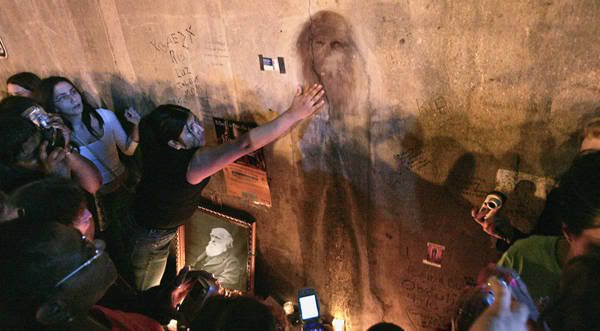
Miraculously, a Darwin-shaped figure appears inside the Holy Church.
Image: The Onion

Last year the Church of England personally apologized to Darwin for misunderstanding natural selection. Now the Catholic Church is following suit. The Vatican is sponsoring a five-day conference on Darwin to mark the 150th anniversary of The Origin of Species. In a statement on the opening day Cardinal William Levada, head of the Vatican's Congregation for the Doctrine of Faith, said that Church doctrine does not conflict with evolution and that there is a "wide spectrum of room" to accept both.

According to the Associated Press:

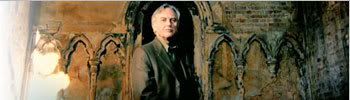
"We believe that however creation has come about and evolved, ultimately God is the creator of all things," he said on the sidelines of the conference. But while the Vatican did not exclude any area of science, it did reject as "absurd" the atheist notion of biologist and author Richard Dawkins and others that evolution proves there is no God, he said. "Of course we think that's absurd and not at all proven," he said. "But other than that ... the Vatican has recognized that it doesn't stand in the way of scientific realities."


Of course, hearing the Catholic Church reject atheism is about as meaningful as listening to Newt Gingrich reject "European-style socialism" at CPAC. Both know what side their bread is buttered on. In 2002, according to former Church finance minister Edmund C. Szoka, the Catholic Church held at least $5 billion in assets and had seen their annual profits increase to $22 million. Now that we've entered a global recession they've even revived the old practice of granting indulgences to get yourself or a loved one out of purgatory. While official Church policy is that money is not required for a plenary indulgence, a donation could speed the process along. According to Rev. Chris Decker, pastor of St. Jude Catholic Church in Baton Rouge, LA:

When it comes to money, if people want to make an offering of thanksgiving, sometimes God moves us to action.
So Church officials aren't going to interupt the good thing they've got going, Darwin or no Darwin. But, because the scientific consensus is so strong, they're not able to appear serious any longer if they continue to deny that evolution is a scientific fact. This strategy to bring Darwin into the fold is merely an attempt to continue business as usual by attempting to rebrand natural selection as coming from divine origin. But I think the Catholic Church needs to better understand the definition of the word "absurd" if they're going to be flinging it about as they are.
ab·surd (adj.) utterly or obviously senseless, illogical, or untrue; contrary to all reason or common sense; laughably foolish or false.

Consider the following: Jesus Christ was sent by God (his father, but also himself) in order to die on the cross for the forgiveness of mankind. This was the ultimate sacrifice to atone for the original sin that accrued when Adam and Eve ate the apple in the Garden of Eden (an act that is also the explanation for why women experience pain in childbirth). This is official Church doctrine accepted from the divine authority of Saint Paul the Apostle in Romans 5:15-21.

However, since human evolution completely negates the story of Adam and Eve, that means there was no original sin. So, in other words, the Catholic Church's official view is now that a supernatural entity descended from the sky so that he could be brutally tortured as a way to forgive people for something that never happened in the first place. And this is somehow less absurd than the idea that people invented these stories to help explain phenomena they weren't able to figure out at the time?

I have no doubt that Catholics will eventually figure out a way to explain away the inconsistencies in their ramshackle worldview. 376 years ago Galileo Galilei was condemned by the Pope for daring to say that the Earth moved around the Sun. Psalm 93:1 states explicitly that the Earth "cannot be moved," and it was feared that any claim otherwise would shake Catholic faith in the divine authority of the Bible. Well, the Earth moves and the Pope still wears his red Prada slippers. Catholics managed to read around that quote and they'll do so again, no matter how absurd their justifications may be.


[Read more →]
Contrary to All ReasonSocialTwist Tell-a-Friend

Dec 16, 2007

How Secularization is Destroying America

Your Sunday Skepticomic from Russell's Teapot.


To view last Sunday's comic click here.


[Read more →]
How Secularization is Destroying AmericaSocialTwist Tell-a-Friend

Nov 6, 2007

Richard Dawkins at Atheist Alliance Convention

Author of The God Delusion at international assembly


Dawkins is at his best as he addresses critics who say he's been too aggressive and strident in his views about religion.

Part 1


Part 2


Both videos are linked from RichardDawkins.net

To view Sam Harris' address at the 2007 AAI Convention click here.


[Read more →]
Richard Dawkins at Atheist Alliance ConventionSocialTwist Tell-a-Friend

Oct 27, 2007

The Problem with Atheism

Sam Harris at the Atheist Alliance International Convention

In my view Sam Harris had some of the most astute comments at this year's AAI convention. The text of his speech was earlier posted at RichardDawkins.net but is now available through YouTube.

Part 1


Part 2


To view Richard Dawkins' address at the 2007 AAI Convention click here.


[Read more →]
The Problem with AtheismSocialTwist Tell-a-Friend

Oct 2, 2007

Incan Path from Religious Beliefs to Evil Deeds

Child sacrifice emphasizes Dawkins' point about religion


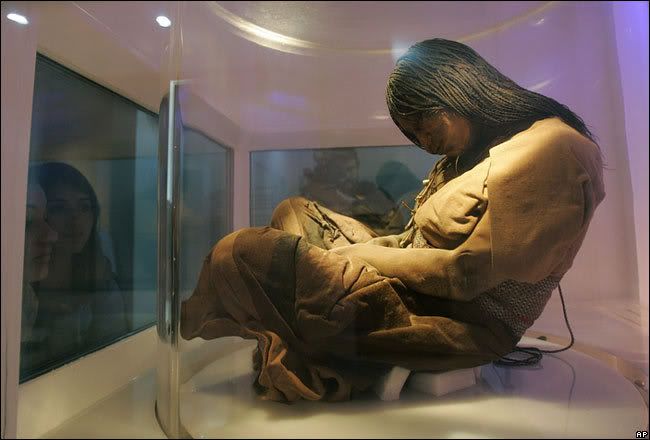
Llullaillaco Maiden

In today’s Washington Post, Richard Dawkins has an op-ed entitled “Logical Path from Religious Beliefs to Evil Deeds” in which he lays bold Stephen Wienberg’s well-known quote that “With or without [religion] you’d have good people doing good things and evil people doing evil things. But for good people to do evil things, it takes religion.”

Dawkins states that:


Nobody is suggesting that all religious people are violent, intolerant, racist, bigoted, contemptuous of women and so on. It would be absurd to suggest such a thing: just as absurd as to generalize about all atheists. I am not even concerned with statistical generalizations about the majority of religious people (or atheists). My concern here is over whether there is any general reason why religion might be more or less likely to bias individuals towards all those unpleasant things in Christopher Hitchens’s list: to make them more likely to exhibit them than they would have been without religion. I think the answer is yes.

As it turns out, a study in the Proceedings of the National Academy of Sciences was also released today demonstrating that Inca priests would fatten up certain children in order to sacrifice them to their gods. Using ancient hair samples from excavated mummies, British archaeologist Andrew Wilson and colleagues were able to identify distinct changes in the chemical signatures that reflect their diet in the time leading up to their ritual sacrifice.

As reviewed in Science Daily:

By analysing stable isotopes found in the hair samples, Dr Wilson and colleagues were able to see that for much of the time prior to sacrifice, the children were fed a diet of vegetables such as potato, suggesting that they came from a peasant background. Stable isotopes of carbon, nitrogen, oxygen and hydrogen from an individual's diet are deposited in their hair where they can remain unchanged over thousands of years.

However, in the twelve months prior to sacrifice, the isotopic evidence shows that the Maiden's diet changed markedly to one that was enriched with plants such as maize, considered an "elite" food, and protein, likely to have come from charki (dried llama meat).

Sacrifices were performed on children between the ages of 6 and 15, many of them horrifically cruel such as on one individual named the Llullaillaco Boy (from where his body was found atop Mount Llullaillaco, a 6,739m volcano on the border of Argentina and Chile):

Previous research has shown that Llullaillaco Boy appears to have met a particularly horrific end. His clothes were covered in vomit and diarrhoea, features indicative of a state of terror. The vomit was stained red by the hallucinogenic drug achiote, traces of which were also found in his stomach and faeces. However, his death was likely caused by suffocation, his body apparently having been crushed by his textile wrapping having been drawn so tight that his ribs were crushed and his pelvis dislocated.

In line with Dawkins' sentiments, no one is suggesting that the Inca were immoral monsters nor does it undermine their incredible cultural and technological achievements. To do so would be an absurd generalization akin to undermining Michelangelo’s genius because his art adorns the Vatican, which was directly responsible for the atrocious burning of “heretics” and the unleashing of the murderous rampages known as the Crusades (or the Frankish invasions as they’re known in the Middle East).

What this archaeological evidence does is simply reinforce Weinberg’s (and Dawkins’) central premise, now with a historical window encompassing many thousands of years and multiple continents:

It is easy for religious faith, even if it is irrational in itself, to lead a sane and decent person, by rational, logical steps, to do terrible things. There is a logical path from religious faith to evil deeds.

Whether our focus is on the murder of homosexuals in Iran, the bombing of doctor's offices in the United States, or genital mutilation in Africa the evidence is abundantly clear. However, for those who believe that framing science means that scientists should confine their comments to more politically acceptable points of view, perhaps a politically acceptable figure from our nation's past should have the final word:

"God is an essence we know nothing of. Until this awful blasphemy is got rid of there will never be any liberal science in the world."

- President John Adams

Reference:

Andrew S. Wilson et al. (2007). Stable isotope and DNA evidence for ritual sequences in Inca child sacrifice. Proceedings of the National Academy of Sciences, to be published in advance online, 1 October 2007


[Read more →]
Incan Path from Religious Beliefs to Evil DeedsSocialTwist Tell-a-Friend

Sep 29, 2007

Atheist Alliance International Convention Sold Out

Enormous demand at New Atheist Conference


The AAI Conference kicked off last night with keynote speeches by Richard Dawkins (The God Delusion) and Sam Harris (The End of Faith). Later today will be Christopher Hitchens (god is not Great) and actress Julia Sweeney (Letting Go of God).

There has been such a rush to attend that organizers have extended the deadline to sign up for a live stream of the conference proceedings. For more info on that see the AAI website.

There are several blogs that have promised to update those of us unable to be there in person.

No God Blog
Friendly Atheist
Free Mind Joe
Homo economicus' blog

Until they update their sites enjoy the following You Tube links:

Julia Sweeney and Christopher Hitchens in recent CBS report:


Excerpt from Julia Sweeney's performance "Letting Go of God"


For a complete AAI conference schedule click here.


[Read more →]
Atheist Alliance International Convention Sold OutSocialTwist Tell-a-Friend

Sep 2, 2007

Atheist and Humanist Carnivals

Some great heathen reading for a lazy Sunday.

The Humanist Carnival #7 is up at Bligbi.

Carnival of the Godless #74 is up at Atheist Faq.


[Read more →]
Atheist and Humanist CarnivalsSocialTwist Tell-a-Friend

Aug 27, 2007

Religion, Secularism & Politics in the 21st Century

Center for Inquiry hosts conference in November


Renowned speakers, scholars, and media personalities will meet to discuss the future of reason and secularism in an America and a world increasingly divided by religion. Join Christopher Hitchens, Alan Dershowitz, Peter Singer, Neil deGrasse Tyson, Wendy Kaminer, Ann Druyan, an unannounced Very Special Guest, and many others for this historic event.

Themes will include:

* The Age of American Unreason
* The Next Islamic Enlightenment
* Science and the Public
* Student Freethinkers Speak Out
* Secularism through History: from Spinoza to JFK

With the Atheist Alliance International Convention in late September, looks like there will be plenty of time to get in some good heathen networking before Christmas.

Learn more and register at the Center for Inquiry website.


[Read more →]
Religion, Secularism & Politics in the 21st CenturySocialTwist Tell-a-Friend

Aug 24, 2007

The Feeling of What Happens

Science, Faith and Nature's Error
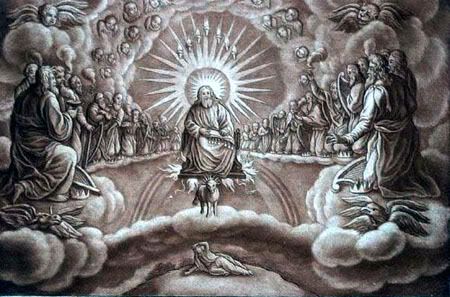

The "Revelation" as described by St. John, though likely inspired through the
use of hallucinogens (see The Mystery of Manna).


The title for this post comes from a terrific book by the neuroscientist Antonio Damasio, but I think it's appropriate for a discussion on faith, feeling and reason. Sam Harris' recent editorial in the journal Nature has effectively gotten people talking about religion, science and what, if anything, each should have to do with the other. In a recent discussion with a fellow blogger it was argued that Harris' inclusion of Christian geneticist Francis Collins in his critique of Nature's editorial staff was improper, effectively undermining his argument.

[R]ather than challenge Collins directly, he lumps Collins with Islamic fundamentalists and the Catholic Church as part of a giant "force of unreason" based on views and positions that Collins adamantly opposes. Sounds rather weak to me.

Firstly, while I'm sure there is much that my friend and I could agree upon, I'm afraid that the issue of religion is one area where we significantly differ. Also, it should be noted, Harris said nothing about "Islamic fundamentalists" but was instead criticizing an earlier argument that claimed moderate Islam constitutes an "intrinsically rational world view." In this way he's only comparing moderate Christianity (via Collins) to moderate Islam. I hope we can both agree on that much.

However, whether the issue is Collins' defense of Christianity, a scientific defense of Islam, or an argument from the Pope or President Bush in defense of their religious views, it is all the same issue. They have already come to their conclusions and are simply fitting the facts to their beliefs. They feel the truth of their convictions and that, as they say, is that. Christianity and Islam may indeed represent an "intrinsically rational world view," but only if you accept the premises they are based upon. It therefore comes down to the evidence for or against this initial premise that forms the foundation for everything that follows. Islam is no different than Christianity or Hinduism or Scientology in the sense that it relies upon a revered text (or texts) and the word of authority instead of evidence. Perhaps more importantly, it relies upon a feeling in its believers. But one can feel something powerfully and it can have no basis in reality. It doesn't matter whether one person feels it or a million people feel it. It doesn't make a false reality any more true.
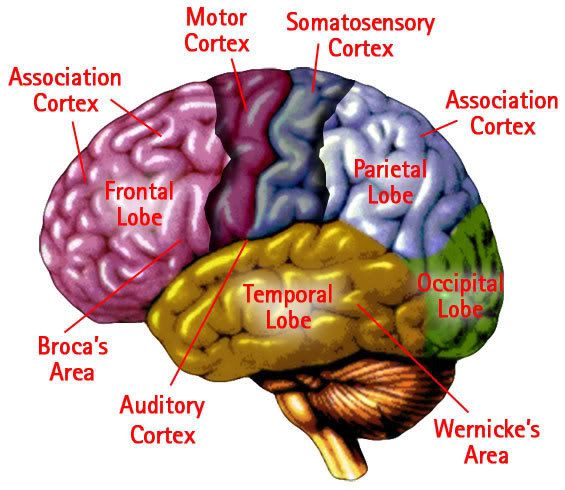


An example would be phantom limbs. A common experience of amputees is to still feel their missing arm or leg years after their accident. They can feel the sensation of opening and closing their hand but, when they open their eyes nothing exists. Their phantom leg will try to get out of bed and pull the frightened person along with them only to bring them crashing to the floor (this is a true case reported to Dr. V.S. Ramachandran in his book Phantoms in the Brain). One could make the argument that a spiritual limb still exists even after the physical limb has been lost. If you accept the premise that we are spiritual beings animating the physical world this is actually a fairly logical conclusion. However, the reality is that this phenomenon is the result of neurons in the somatosensory cortex for that limb which continue to fire and thus create the sensation of a false reality.

It's not too much of a stretch to link such phantom limbs with a feeling for God. What's more likely? That an invisible world exists that controls our destiny (but that people around the globe interpret in vastly different ways) or that all humans have similar neural networks that, under certain circumstances, engender a feeling of the divine? A great deal of work has been done in just this area. A terrific book in this field is Why God Won't Go Away. Among other fascinating discoveries, it demonstrates how Buddhist monks and Franciscan nuns both invoke the same brain regions when they tap into the "oneness of the Universe" or "make contact with God" depending on their various interpretations of the same experience. Through their training and dedication in meditation or prayer they in effect "trick" their mind into creating a false reality.

Other individuals, such as those with temporal lobe epilepsy, have these false realities thrust upon them. Just like epilepsy of the motor cortex that results in spasmodic activation of the muscles, temporal lobe epilepsy causes the same repetitive firing of neuronal circuits but in a region of the brain central for our concept of space and time. Such individuals report ecstatic experiences of being in touch with the divine, or of receiving God's revelation if they were previously religious.


Artist depiction of Ellen G. White experiencing a vision.

To give just one well documented case, Ellen G. White, the founder of the Seventh-day Adventist Church, experienced powerful visions of "revelation" for most of her adult life following a serious head injury. As she described in her voluminous writings:

"I would say that when the Lord sees fit to give a vision, I am taken into the presence of Jesus and the angels, and am entirely lost to earthly things. I can see no farther than the angel directs me. My attention is often directed to scenes transpiring upon earth.

At times I am carried far ahead into the future and shown what is to take place. Then again I am shown things as they have occurred in the past."

Dr. Molleurus Couperus argued, in a study later published in Adventist Times, that the most likely explanation is that these visions were the result of partial-complex seizures such as would occur in temporal lobe epilepsy.

1. Ellen was a healthy normal girl, both physically and emotionally, until at the age of nine, she was hit by a stone on the nasal area of her face. She was unconscious for 3 weeks, indicating a severe brain injury; and was not able to remember anything about the accident or its aftermath. The type and location of her head injury, and the resulting period of unconsciousness and amnesia, made it likely that she would ultimately develop epileptic seizures.

2. Her dreams and visions began at age fifteen, some six years after her accident; and they continued throughout her life. When Ellen's vision experiences are compared with the seizures of temporal lobe epilepsy, they are found to be typical of partial complex seizures.

3. Following this, her behavioral traits were compared with those of temporal lobe epileptics and found to be similar.

Ellen White's visions were no more outlandish than those of past mystics (in fact, epilepsy is a likely candidate for the visions of Muhammad). The only difference is that her experiences and behavior were well documented and can be carefully compared to current neurological case studies. A further argument in favor of the view that the divine is an internal state is that people in cultures all over the world shock their systems through fasting, rhythmic prayer, chanting or even with hallucinogens in order to trick their brains into a mystical experience.



Most people aren't dedicated enough to train their neural pathways such as monks or nuns nor are they afflicted with what could be viewed as either the blessing or curse of temporal lobe epilepsy. But most people are raised in a tradition initiated by others who swear that their internal fantasy must be everyone's reality. Moses, Muhammad, Jesus, Siddhartha, Martin Luther, Joseph Smith, Ellen White, A.C. Bhaktivedanta Swami Prabhupada and many other religious figureheads, both real and mythical, reported fantastic visions not available to most of us (though there is good evidence that Joseph Smith was merely a con man). We believe their visions because, well, we prefer to. It gives us hope. Provides meaning. We don't have to pay attention during biology class. Plus there are hundreds, sometimes thousands, sometimes millions of others that also believe in their visions. Charismatic authority figures spend their lives devoted to spreading these visions to others -- even those who never experienced such visions themselves but always longed to find that same connection. However, all of this just reinforces what is ultimately nothing more than someone's feeling.

So regardless of Francis Collins' credentials as a good scientist (and I wouldn't doubt his ability for a moment) his logic that God exists is based purely on rationalizing a feeling he once had in front of a winter waterfall. Cloaking this feeling in the language of science doesn't give it any more legitimacy, in fact it often led to tangled logic. Collins can believe whatever he likes about his experience, as can anyone. We all live with our private fantasies to a certain extent. However Harris' point is that in the admirable attempt to be inclusive, Nature's editors were foregoing their primary role as skeptical inquirers of sound science. Should they favorably review the next book on astrology if it also includes a reasonably good description of cosmic evolution? I think the point Harris makes is a good one and something we should seriously consider as scientists and citizens. We've seen how effectively faith has led the way in foreign policy decisions. Perhaps a return to reasonable arguments based on solid evidence would be a wiser course for the future.


For a background of my personal experience with religious belief see my post Calculating Faith.


[Read more →]
The Feeling of What HappensSocialTwist Tell-a-Friend

Scientists Should Unite Against Threat From Religion

In the current issue of Nature, Sam Harris (author of The End of Faith and Letter to a Christian Nation) penned this critique of the Nature editors' inclusion of religious apologists.


Correspondence

Nature 448, 864 (23 August 2007) | doi:10.1038/448864a;

Published online 22 August 2007

Sam Harris
http://www.samharris.org


Sir

It was genuinely alarming to encounter Ziauddin Sardar's whitewash of Islam in the pages of your journal ('Beyond the troubled relationship' Nature 448, 131–133; 2007). Here, as elsewhere, Nature's coverage of religion has been unfailingly tactful — to the point of obscurantism.

In his Commentary, Sardar seems to accept, at face value, the claim that Islam constitutes an "intrinsically rational world view". Perhaps there are occasions where public intellectuals must proclaim the teachings of Islam to be perfectly in harmony with scientific naturalism. But let us not do so, just yet, in the world's foremost scientific journal.

Under the basic teachings of Islam, the Koran cannot be challenged or contradicted, being the perfect word of the creator of the Universe. To speak of the compatibility of science and Islam in 2007 is rather like speaking of the compatibility of science and Christianity in the year 1633, just as Galileo was being forced, under threat of death, to recant his understanding of the Earth's motion.

An Editorial announcing the publication of Francis Collins's book, The Language of God ('Building bridges' Nature 442, 110; doi:10.1038/442110a 2006) represents another instance of high-minded squeamishness in addressing the incompatibility of faith and reason. Nature praises Collins, a devout Christian, for engaging "with people of faith to explore how science — both in its mode of thought and its results — is consistent with their religious beliefs".

But here is Collins on how he, as a scientist, finally became convinced of the divinity of Jesus Christ: "On a beautiful fall day, as I was hiking in the Cascade Mountains... the majesty and beauty of God's creation overwhelmed my resistance. As I rounded a corner and saw a beautiful and unexpected frozen waterfall, hundreds of feet high, I knew the search was over. The next morning, I knelt in the dewy grass as the sun rose and surrendered to Jesus Christ."

What does the "mode of thought" displayed by Collins have in common with science? The Language of God should have sparked gasping outrage from the editors at Nature. Instead, they deemed Collins's efforts "moving" and "laudable", commending him for building a "bridge across the social and intellectual divide that exists between most of US academia and the so-called heartlands."

At a time when Muslim doctors and engineers stand accused of attempting atrocities in the expectation of supernatural reward, when the Catholic Church still preaches the sinfulness of condom use in villages devastated by AIDS, when the president of the United States repeatedly vetoes the most promising medical research for religious reasons, much depends on the scientific community presenting a united front against the forces of unreason.

There are bridges and there are gangplanks, and it is the business of journals such as Nature to know the difference.

I followed up on this editorial with my post The Feeling of What Happens.


[Read more →]
Scientists Should Unite Against Threat From ReligionSocialTwist Tell-a-Friend

Aug 19, 2007

Ever Considered Being an Evangelical Atheist?

From John Safran vs God

For those of you who haven't heard of Australian comedian John Safran, this bit where he travels to Utah to inform Mormons about the good news is not to be missed.


[Read more →]
Ever Considered Being an Evangelical Atheist?SocialTwist Tell-a-Friend