ERIC MICHAEL JOHNSON
_____________________________________________________________________________________________________

"If the misery of the poor be caused not by the laws of nature, but by our institutions, great is our sin."
- Charles Darwin
_____________________________________________________________________________________________________
Showing posts with label science. Show all posts

Jan 13, 2008

It's All in the Method

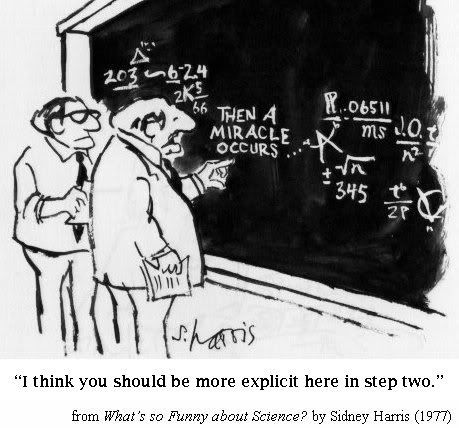
Your Sunday Skepticomic from John Trever.
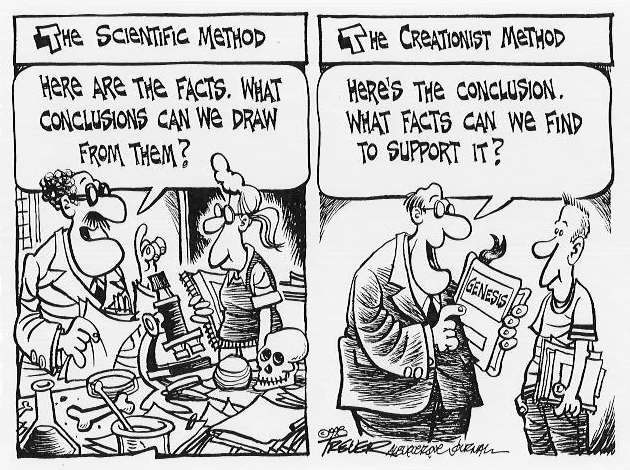


To view last Sunday's comic click here.


[Read more →]
It's All in the MethodSocialTwist Tell-a-Friend

Oct 25, 2007

Controversial and Sad

James Watson retires after promoting racist science
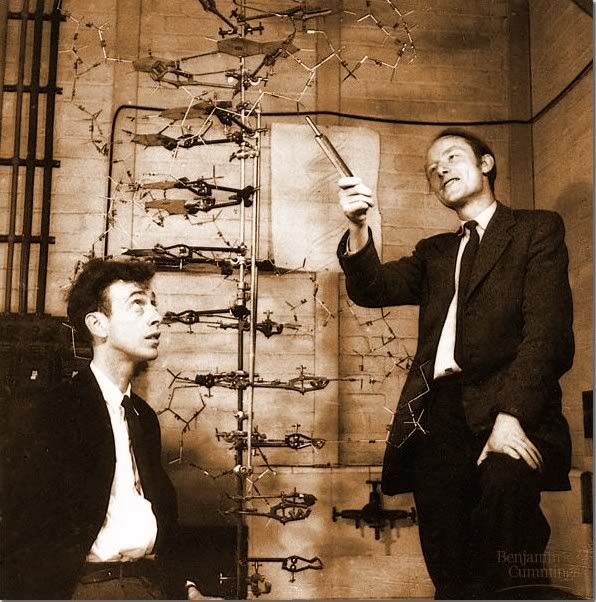

James Watson and Francis Crick after their discovery of DNA in 1953.

Image: A. Barrington Brown/Photo Researchers Inc.

The final chapter (one hopes) in a shameful history of scientific racism has just departed in a cloud of embarrassment. As I detailed earlier, DNA co-discoverer James Watson made the unambiguous statement that he thought Africans were less intelligent than other people, a claim he has just as unambiguously rejected.

"To all those who have drawn the inference from my words that Africa, as a continent, is somehow genetically inferior, I can only apologize unreservedly. That is not what I meant. More importantly from my point of view, there is no scientific basis for such a belief."

Watson has now announced his retirement as chancellor of Cold Spring Harbor Laboratory, where he was director from 1968 - 2003.

As New Scientist reports:

Eduardo Mestre, chairman of the board of CSHL, says Watson's contribution to the understanding of DNA "will continue to influence biomedical research for decades to come", and added that, the board "respects his decision to retire at this point in his career".


There is no doubt that Watson's past scientific work has been exemplary, however his numerous public statements have revealed him to be not only racist but also sexist and homophobic. While Watson is welcome to hold whatever opinions he likes, he does a great disservice to the public trust by representing the scientific viewpoint in such a shameless manner. I wish him well, but am glad not to have him on the public stage any longer.


[Read more →]
Controversial and SadSocialTwist Tell-a-Friend

Oct 23, 2007

Wedging Religion into Science (Again)

Answers in Genesis promotes miseducation in America
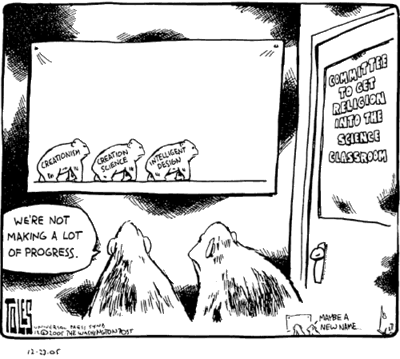

Image: Tom Toles/Washington Post

As AiG is currently attacking public science education (and, surprise, not because our science standards are ill preparing our students) I thought it would be appropriate to repost this article from the last time they tried to pull this nonsense. It's organizations like this that continue to ensure that our nation's understanding of evolution reaches a whopping 33rd out of 34 countries (just ahead of Turkey).

--

Ken Ham, founder of Answers in Genesis and creator of the Creation Museum, is currently promoting his new book by submitting sample chapters on his group's website. Entitled War of the Worldviews the book teaches Young-Earth biblical literalists strategies on how to argue against the evidence for evolution.

At the beginning of the chapter he chastises Christians for adopting “flaky evidence” to support their views.

Over the past several years, some so-called “evidence” for creation has been shown not to be reliable. Some of these are

* supposed human and dinosaur footprints found together at the Paluxy River in Texas.
* the small accumulation of moon dust found by the Apollo astronauts.
* a boat-like structure in the Ararat region as evidence of Noah’s Ark.
* a supposed human handprint found in “dinosaur- age rock.”
* a dead “plesiosaur” caught near New Zealand.

Most well-meaning, informed creationists would agree in principle that things which are not carefully documented and researched should not be used. But in practice, many of them are very quick to accept the sorts of evidences mentioned here, without asking too many questions.

Initially I was impressed. Could Ham be urging his readers to seriously engage the scientific evidence in an effort to make reasoned arguments? Alas, this was not the case. His answer to the flaky evidence that creationists have long used is, rather, don’t use any evidence at all!

When someone says they want “proof” or “evidence,” not the Bible, one might respond as follows: “You might not believe the Bible, but I do. And I believe it gives me the right basis to understand this universe and correctly interpret the facts around me.”

Let’s just apply that logic in another way, shall we? There are few scientists today who would argue that bats are actually birds rather than mammals. Pesky issues regarding bone structure and their nursing of infants make this a difficult theory to gain support for. But suppose all of the science isn’t in, the same way that all of the science isn’t in about continental drift (has anyone actually watched continents move?). Isn't there room for an alternative theory?

The Bible clearly states (Deuteronomy 14:11 & 14:18) that bats truly are birds, and they’re unclean birds at that. So by Ham's logic, this evidence deserves equal weight to that of the so-called experts. But as you’re answering a question on your zoology midterm that asks “Are bats birds?” (this is a very introductory level class) and you answer “Yes” I would encourage you NOT to attempt Ham’s suggested response to your science teacher after it's been marked wrong.

Likewise, a solid majority of astronomers (perhaps a little more) accept the evidence that the Earth spins on its axis daily and orbits around the sun. However, the Bible does clearly state that “all the earth: the world also shall be stable, that it be not moved.” (1 Chronicles 16:30). In fact, there are several passages that lend credence to the potentially lucrative field of Christian Geocentric Science (see Job 9:6-7; Job 37:18; Psalm 19:4-6; Psalm 93:1; Ecclesiastes 1:5; you get the picture).

So when someone claims there is evidence for this so-called Heliocentric Theory (afterall, it is only a theory and it's not as though anyone can feel the Earth move) you can simply tell them,

“You might not believe the Bible, but I do. And I believe it gives me the right basis to understand this universe and correctly interpret the facts around me.”

Is it legitimate to use such a response? Should the federal government force teachers to mention this competing theory in science classes? If your answer is yes, than you’ve probably purchased Ham’s book and added to his reported $125,000 yearly salary.

In a related note, as Ham is encouraging the Young-Earthers to back away from “flaky evidence” he might want to take his own advice. During a lecture criticizing the evidence for evolution last year Ham laid the following egg:

He pointed out cave drawings of a creature resembling a brachiosaur to make the case that man lived alongside dinosaurs after God created all the land animals on Day 6.

Cave drawings are evidence? That's what that crank von Däniken tried to pull. This would simply be comic, except for one thing. They're not in on the joke and are teaching hundreds of thousands of children at home schools across the country this very rubbish. They're forming think-tanks, founding law schools and funding politicians and they will not listen to reason. They're being taught not to.


[Read more →]
Wedging Religion into Science (Again)SocialTwist Tell-a-Friend

Sep 22, 2007

The Grassroots of Scientific Revolution

Rejection of authority and working-class values inspired the scientific method.
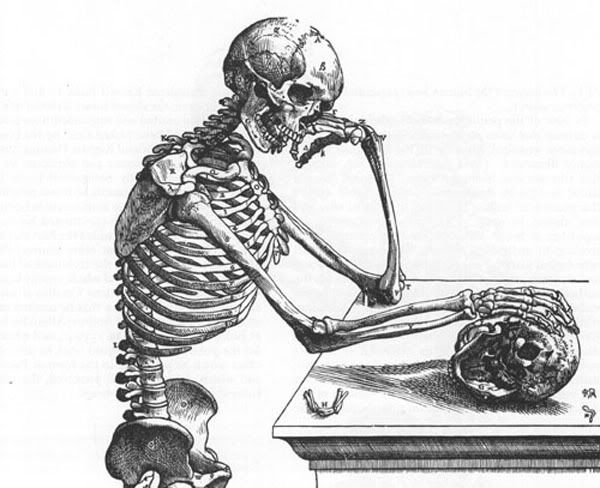

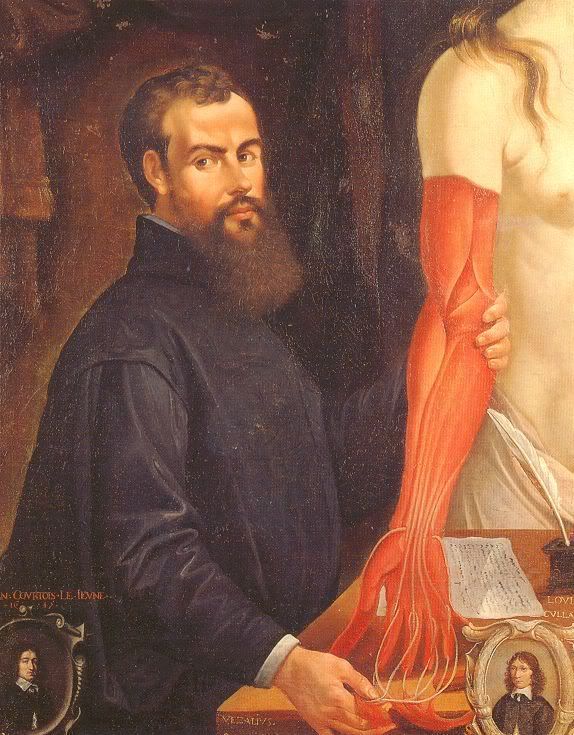
Drawing by Renaissance physician Vesalius

As everyone knows, when food is digested it is processed into chyle and turned into blood by the liver. This blood then flows to the lungs where it releases any impurities into the air. Flowing from the lungs into the left ventricle of the heart the blood then mixes with air and is charged with animal spirit – where it changes from dark purple to bright red. This charged blood then passes through the arteries and throughout the body.

At least, if you had lived anywhere in the Western world up until the early 1600s this would have been common knowledge. This system developed between 150 and 200 AD by the Greek physician Galen was viewed as medical dogma by centuries of physicians and professors to follow. The revolution that accompanied the rejection of Aristotelian physics with Copernicus, Kepler and Galileo found its biological equivalent in the work of physicians operating at the same time in the form of Paracelsus, Vesalius and Harvey.

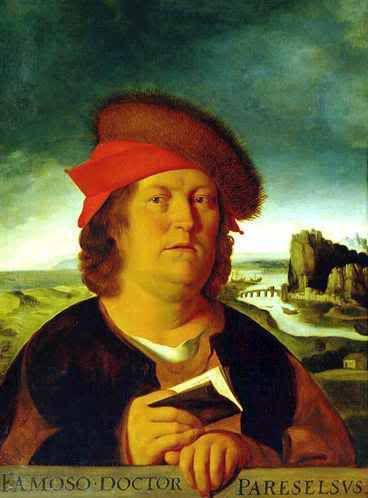
Revolutionary insights in biology during the Renaissance aren’t as well known as in the physical sciences, and the biological revolution is generally reserved for the publication of Darwin’s On the Origin of Species. However, beginning in the 1520s, the seeds of revolution were being sown as physicians and professors alike began to reveal the disparities in Galen’s classical texts on anatomy and medicine. The first of these revolutionary voices was that of Phillip von Hohenheim, later adopting the title of Paracelsus (meaning “greater than Celsus,” a Roman encyclopedist of medicine from the first century AD).


Paracelsus announced his revolution by publicly burning
the standard medical text.

Paracelsus was born and raised in Switzerland and began his revolution in biology twenty years before Copernicus published the book that officially marks the beginning of the scientific revolution. This break from ancient dogma was clear from the very beginning. As I. Bernard Cohen writes in his Revolution in Science:

When Paracelsus was appointed municipal physician and professor at Basel in 1527, he declined taking the normal oath; rather, he issued a broadside declaring his disagreement with Galenic principles and announcing a new system of medicine. It was only a few months later (24 June 1527) that he publicly burned a copy of the standard textbook of the day, Avicenna’s Canon of Medicine” (183).
This breach with established authority could well provide a new beginning point for the scientific revolution, arriving just ten years after Martin Luther nailed The 95 Theses to the door of the Castle Church. However, this biological revolution may have been more of a revolution in the practice of science rather than what was actually being discovered. Paracelsus rejected “organized religion and classical scholarship” and was described as having an “unwillingness to make concessions to custom and authority.” Most notably, he outraged his contemporaries by lecturing directly to the local people in German rather than the more erudite Latin and for inviting the lowly barber-surgeons to his courses. This suggests that Paracelsus had a closer bond with working people than with the paragons of academia. Perhaps from this perspective Paracelsus was more willing to use a hands-on approach to his research that involved his own dissections (rather than merely referring to Galen) and experimentation with chemical cures for disease.

Unlike the Galenists, who believed disease was the result of an internal disorder between the four humors (blood, phlegm, yellow bile and black bile), Paracelsus thought that disease was the result of “a specific agent foreign to the body” from the air that acted as a parasite on an otherwise healthy individual (the microscope wouldn’t be invented for another seventy years so the germ theory of disease was a distant idea). This frame of reference (external agents rather than internal humors) had a profound impact on the practice of medicine. For Paracelsus, if a foreign agent was responsible for disease, than a reagent could counter it. Experimental medicine, in the form of chemistry, was the Paracelsian innovation.


Vesalius from his On the Fabric of the Human Body

This innovation was continued in the work of Andreas Vesalius. In 1537, still five years before On the Revolutions of the Heavenly Spheres would be published on Copernicus’ deathbed, Vesalius continued Paracelsus’ revolution (though without embracing his ideas) by deciding for himself whether the ancients were correct. Even at the tender age of twenty-three Vesalius demonstrated his break with the traditional order:

“From the start he showed his independence, for in his anatomical lectures and demonstrations . . . he broke with tradition and, ‘contrary to custom . . . himself performed the dissections rather than consigning that task to a surgeon’” (177).
His willingness to challenge established authority led him to offer detailed critiques of the Galenic texts that were revered by medical authorities. However Vesalius broke not just with the ancients but also with his contemporaries, feeling the medical establishment taught in such a way that there was “very little offered to the students that could not be taught by a butcher in his shop.” This “do-it-yourself” attitude that is more akin to craftsmen than the paragons of academia is also apparent in Vesalius’ book On the Fabric of the Human Body in which he offered detailed instructions (including a list of tools) that a student could use to perform their own dissections and “arrive at an independent conclusion” from either himself or Galenic dogma.


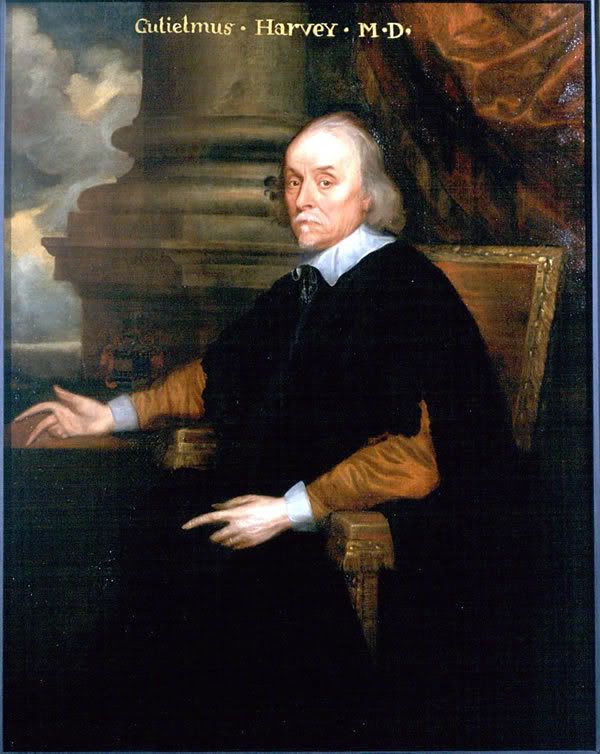
William Harvey broke completely with Galenic biology

The anatomist William Harvey then codified the revolution in biology begun by Paracelsus and Vesalius. As the first to discover that the heart pumps the blood through a single circulatory system, his work marks the radical break from Galen that earlier researchers had initiated. Receiving his doctorate in medicine in 1602, Harvey would have been well familiar with the then notorious Copernicus and was a contemporary of Kepler, Descartes and Galileo (the latter was even a young professor at the University of Padua where Harvey received his degree). By now the independent research model of science (rather than mimicry of the ancients) was well established and Harvey initiated original investigations on more than eighty species including humans.

“What Harvey did was to determine, by actually making measurements, the capacity of the heart in humans, dogs, and sheep. Then by multiplying this number by the pulse rate, he computed how much blood is transferred from the heart to the arteries – approximately 83 pounds of blood in each half-hour.” (191).

Harvey acknowledged his firm break with Galen and the ancients and announced his revolutionary intentions when he stated “this book of mine was the only one to oppose tradition and to assert that the blood traveled along a previously unrecognized circular pathway of its own” but he feared that “I may suffer from the ill-will of a few, but dread lest all men turn against me.” However, like Copernicus it would take many years before the insights he published were picked up and appreciated for the revolutionary break with tradition that they were.

“Harvey created a single circulatory system with a single center (the heart) to replace the multiple systems of Galen. This was a similar achievement to the creation of a single system of the world by Copernicus, and especially Kepler, to replace the collection of separate systems in Ptolemy’s Almagest. Similarly, Harvey’s devastating proof of the falsity of the Galenic doctrine may be likened to Galileo’s proof that the Ptolemaic system for Venus does not accord with reality” (194).
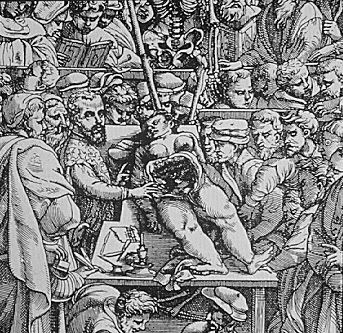


Drawing of Vesalius in a public demonstration of anatomy

The independent research and experimentation of science rather than obeisance to authority, a practice that had more in common with working craftsmen than the educated elite, may well have been the crucial ingredient that spawned the scientific revolution. The bridging of innovation and knowledge from the bottom-up rather than the top-down method that regurgitated Aristotle and Galen for generations, offered the freedom to innovate and imagine new systems of knowledge. If science is to continue to thrive it will be by embracing this revolutionary spirit of independence in thought and originality in experimental design. Researchers today owe a tremendous debt to the craftsmen and science enthusiasts of yesteryear who inspired this revolutionary drive and earned the authority that the scientific method currently holds.


[Read more →]
The Grassroots of Scientific RevolutionSocialTwist Tell-a-Friend

Sep 18, 2007

Smothered to Death

Collective defense of honey bee nests show grisly adaptations in action


Honeybees cooperate in the asphyxiation of a trespassing wasp


Cyprian honey bees under attack by predator hornets have evolved a grisly and lethal way of fighting back which scientists have called "asphyxia-balling."

An intruding hornet looking for a snack in a beehive may suddenly find itself enveloped inside a buzzing ball of black-and-yellow worker drones. The bees squeeze in tightly around the abdomen – where hornets breath – until the would be aggressor dies of suffocation.

A team of Greek and French biologists, led by Alexandrous Papachristoforou of Aristotle University in Thessaloniki, Greece, have observed this insect drama dozens of times, both in the laboratory and in nature. They report the find today in the British journal Current Biology.

The researchers had noted that the mobbing bees targeted the hornets' abdomen, which is critical for the insects' ability to breathe. By pumping their abdominal muscles, the hornets bring in air through small openings called spiracles, which are covered by structures known as tergites when air is released.

To find out whether the bees could be blocking the hornets' breathing, the researchers monitored their respiration under normal conditions and those designed to mimic the balling behaviour, in which they covered either two or four of the insects' tergites. The hornets' respiration declined by about 33 and 87 per cent, respectively, in these experiments.

Next, they tested whether the bees could kill hornets whose tergites were held open with tiny plastic blocks. They found that the bees took twice as long to kill such manipulated hornets.

The technique used by Apis mellifera to dispatch its most formidable enemy differs in crucial ways from the already known method used by its Asian cousin. Asian honey bees also form a deadly scrum around a hornet but rather than smothering the attacker, they kill it by raising the hornet's body temperature – by pressing in while buzzing their wings – beyond a critical threshold.

Cyprian bees, however, cannot generate enough heat to kill by "thermo-balling" and thus crush in on the hornet's abdomen. In the end, the researchers conclude, the hornet dies from a combination of overheating and lack of oxygen. The average time for smothering a hornet was 57.8 minutes.

Source: Cosmos Magazine


[Read more →]
Smothered to DeathSocialTwist Tell-a-Friend

Sep 13, 2007

Primate Experimentation Under the Microscope

Europe moves towards banning experiments on non-human primates.
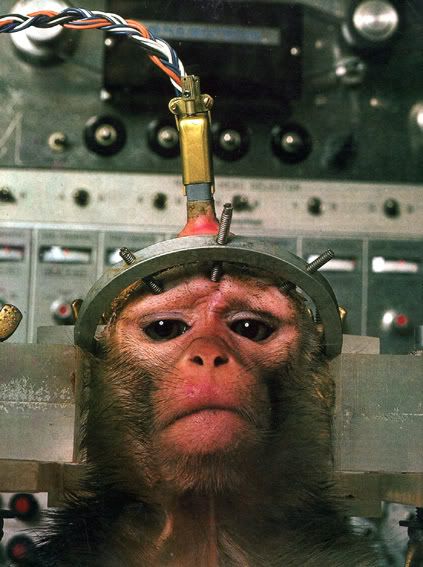

Macaque used for invasive brain experimentation.
Image: Unattributed

As I wrote in my post The Dangers of Technological Adolescence, the history of experimentation on unwilling human subjects has a long and despicable record. However, the use of invasive experiments with primates on everything from cosmetics testing to HIV infection studies is ongoing. There have been numerous recent court cases on the rights of primates in the legal system (for example see Trapped Between People and Property). The evidence of advanced primate cognition and emotional richness raises important questions about what are appropriate scientific ethical norms for necessary, and potentially life saving, research.

Ghandi said, “The greatness of a nation and its moral progress can be judged by the way its animals are treated.” Currently, the United States has the most lenient policy on primate experimentation in the Western world (see Nature 417, 684-687 – subscription required). According to a resolution to end primate experiments passed by The Humane Society and endorsed by Jane Goodall, as of 2004 there were 54,998 primates in some 200 facilities used for invasive biomedical research (this figure doesn’t include laboratory primates used for breeding). Between 1,300 and 1,400 of these individuals were chimpanzees, the only great ape used in biomedical labs and who share between 98.6% and 99.4% of their DNA with humans.

As reported today in New Scientist Europe is on track to make the United States unique in our permissive research policies by banning all experiments on great apes and other non-human primates. Last week 433 of 626 members of the European Parliament signed a non-binding document that:

“Urges the Commission to propose an end to all non-human primate experiments . . . in scientific procedures, specifically: to prohibit chimpanzee experiments and the use of wild-caught primates in the EU and phase out all non-human primate experiments in the EU over the next six years;”

Later this year the European Commission is scheduled to redraft the regulations on animal experimentation. This written declaration provides a strong indication of the direction these regulations will take and may well overturn the 21-year policy allowing experiments on non-human primates. The written declaration exceeds those currently in place in Britain that bans great ape experimentation and is very close to what the Primate Freedom Project has been advocating in the United States.

While biomedical research has undeniable benefits for us, I think we should carefully consider what costs we would be willing to inflict on others to reap them. As Europe joins the chorus of voices urging scientists to cease their invasive experimentation on primates, perhaps it's time for us to reexamine our position.


[Read more →]
Primate Experimentation Under the MicroscopeSocialTwist Tell-a-Friend

Sep 11, 2007

The Dangers of Technological Adolescence

A brief history of scientific "progress" in human experimentation.


A diorama showing Japanese researchers testing biological weapons on villagers
in Ping Fan, China during the 1930s.

*This post has also been picked up by the Chronicle of Higher Education. Join the debate at their blog or in the comments below.

Perhaps it’s because today is overcast or perhaps it’s due to the generalized sense of self-reflection I feel on this morose day. But as we champion “economic progress” beyond all other concerns (including the integrity of our ecosystem) it’s only appropriate that I take a good, long look in the mirror at the ugly history behind “scientific progress”. The legacy of cruel experimentation on primates is well documented and ongoing. But the history of scientific experimentation on unwilling human subjects should warn all wide-eyed science enthusiasts about the costs of placing progress above all other concerns.

Recently the abused orphans of the University of Iowa “Monster Study” were granted a $925,000 payment from the state. In an experiment by a psychology graduate student, six otherwise normal children were subjected to psychological cruelty in order to find out if stuttering could be induced. All of them experienced lifelong emotional distress and social anxiety, and none of them became a stutterer.

This is an issue that is as old as experimental science, and has frequently ended much worse for the, usually poor, victims. In the 1570s a battle was being waged between the Paracelsians and the Galenists about which theorist had the best understanding of medicine. German born alchemist and anatomist Paracelsus outraged many of his 16th century contemporaries by criticizing the, then, 1,700 year-old writings of the Greek physician Galen. His followers were adamant to prove their master’s techniques and sought a test for their “chemical medicines” derived from lethal poisons. As Allen G. Debus writes in Man and Nature in the Renaissance:

“In the mid-seventeenth century it was suggested that several hundred sick poor people be taken from the hospitals and the military camps. They were to be divided into two groups, one to be treated by the Galenists, the other by the chemists. The number of funerals would determine whether the chemical or the traditional medicine had triumphed.” (p. 31).

In the early period of American medicine doctors would perform experiments on their socially “less valuable” patients. As Susan Lederer writes in Subjected to Science: Human Experimentation in America Before the Second World War:

“Before the discovery that monkeys could be infected with syphili and gonorrhea, the search for microbes of venereal disease prompted more than forty reports of experiments in which individuals were inoculated with the suspected germs of gonorrhea and syphilis. In 1895 New York pediatrician Henry Heiman . . . described the successful gonorrheal infection of a 4-year-old boy (“an idiot with chronic epilepsy”), a 16-year-old boy (an “idiot”) and a 26-year-old man in the final stages of tuberculosis.”

Even after the atrocities of Dr. Mengele and the Nazi experimenters were exposed (and human experimentation was condemned as part of the Nuremburg Tribunal) patients continued to be subject to life threatening experiments without their consent. In Eileen Welsome's book, The Plutonium Files, it documents how human radiation experiments were performed between 1951 and 1962 by injecting various concentrations of plutonium into unknowing patients in the United States:

“Physcians performed experiments on healthy people and sick patients without informing them of what was going on or getting their consent. Sick patients were preyed on most frequently. They were convenient, plentiful, and vulnerable, since nontherapeutic procedures could be administered easily under the guise of medical treatment. . . Terminally ill patients were perhaps the most vulnerable group of all. . . Women, children, unborn fetuses, minorities, the mentally retarded, schizophrenics, prisoners, alcoholics, and poor people of all ages and ethnic groups were targets.” (p. 214-215).

The 1994 Rockefeller Senate Report Examining Biological Experimentation on U.S. Military found that for fifty years the Department of Defense had intentionally exposed military personnel to dangerous substances without their knowledge or consent including mustard gas, radiation, and hallucinogenic drugs.

I shudder to think what has gone on today under the unprecedented secrecy of the current administration. But if our leaders are willing to use illegal chemical and experimental weapons on civilians in Iraq, I wouldn’t remain optimistic.

“It has become appallingly obvious that our technology has exceeded our humanity,” stated Albert Einstein at the tipping point of the nuclear age. We have much progress to achieve if we wish to close the gap before this imbalance teeters out of control. As I began this morning's post with a quote from one of this generation's greatest advocates for both science and humanity (as well as one of my personal heroes), I see it as only fitting that I should close tonight's in the same fashion.

[I]t is possible to avoid the dangers of the period of technological adolescence we are now passing through. There are some who look on our global problems here on Earth - at our vast national antagonisms, our nuclear arsenals, our growing populations, the disparity between the poor and the affluent, shortages of food and resources, and our inadvertent alterations of the natural environment of our planet - and conclude that we live in a system which has suddenly become unstable, a system which is destined soon to collapse. There are others who believe that our problems are soluble, that humanity is still in its childhood, that one day soon we will grow up.

- Carl Sagan, The Quest for Extraterrestrial Intelligence (1978)

References:

Debus, Allen G. (1978). Man and Nature in the Renaissance. Cambridge University Press, London.

Lederer, Susan. (1997). Subjected to Science: Human Experimentation in America Before the Second World War. John Hopkins University Press, Maryland.

Welsome, Eileen (2000). The Plutonium Files: America’s Secret Medical Experiments in the Cold War. Delta, New York.


[Read more →]
The Dangers of Technological AdolescenceSocialTwist Tell-a-Friend

Aug 26, 2007

"Intelligent" Design and Magical Thinking

You Sunday Skepticomic from The New Yorker.


To view last Sunday's comic click here.


[Read more →]
"Intelligent" Design and Magical ThinkingSocialTwist Tell-a-Friend

Aug 24, 2007

The Feeling of What Happens

Science, Faith and Nature's Error


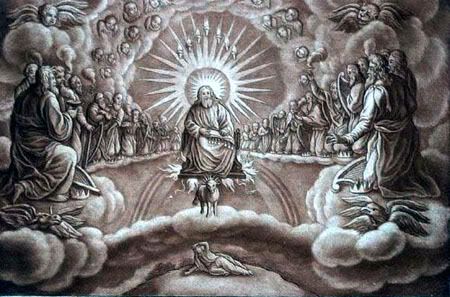
The "Revelation" as described by St. John, though likely inspired through the
use of hallucinogens (see The Mystery of Manna).


The title for this post comes from a terrific book by the neuroscientist Antonio Damasio, but I think it's appropriate for a discussion on faith, feeling and reason. Sam Harris' recent editorial in the journal Nature has effectively gotten people talking about religion, science and what, if anything, each should have to do with the other. In a recent discussion with a fellow blogger it was argued that Harris' inclusion of Christian geneticist Francis Collins in his critique of Nature's editorial staff was improper, effectively undermining his argument.

[R]ather than challenge Collins directly, he lumps Collins with Islamic fundamentalists and the Catholic Church as part of a giant "force of unreason" based on views and positions that Collins adamantly opposes. Sounds rather weak to me.

Firstly, while I'm sure there is much that my friend and I could agree upon, I'm afraid that the issue of religion is one area where we significantly differ. Also, it should be noted, Harris said nothing about "Islamic fundamentalists" but was instead criticizing an earlier argument that claimed moderate Islam constitutes an "intrinsically rational world view." In this way he's only comparing moderate Christianity (via Collins) to moderate Islam. I hope we can both agree on that much.

However, whether the issue is Collins' defense of Christianity, a scientific defense of Islam, or an argument from the Pope or President Bush in defense of their religious views, it is all the same issue. They have already come to their conclusions and are simply fitting the facts to their beliefs. They feel the truth of their convictions and that, as they say, is that. Christianity and Islam may indeed represent an "intrinsically rational world view," but only if you accept the premises they are based upon. It therefore comes down to the evidence for or against this initial premise that forms the foundation for everything that follows. Islam is no different than Christianity or Hinduism or Scientology in the sense that it relies upon a revered text (or texts) and the word of authority instead of evidence. Perhaps more importantly, it relies upon a feeling in its believers. But one can feel something powerfully and it can have no basis in reality. It doesn't matter whether one person feels it or a million people feel it. It doesn't make a false reality any more true.


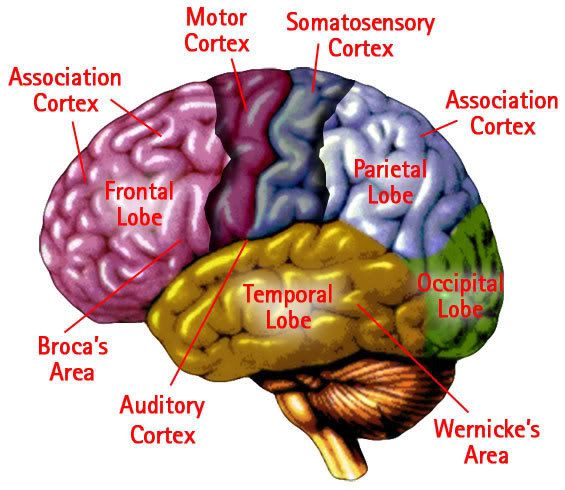
An example would be phantom limbs. A common experience of amputees is to still feel their missing arm or leg years after their accident. They can feel the sensation of opening and closing their hand but, when they open their eyes nothing exists. Their phantom leg will try to get out of bed and pull the frightened person along with them only to bring them crashing to the floor (this is a true case reported to Dr. V.S. Ramachandran in his book Phantoms in the Brain). One could make the argument that a spiritual limb still exists even after the physical limb has been lost. If you accept the premise that we are spiritual beings animating the physical world this is actually a fairly logical conclusion. However, the reality is that this phenomenon is the result of neurons in the somatosensory cortex for that limb which continue to fire and thus create the sensation of a false reality.

It's not too much of a stretch to link such phantom limbs with a feeling for God. What's more likely? That an invisible world exists that controls our destiny (but that people around the globe interpret in vastly different ways) or that all humans have similar neural networks that, under certain circumstances, engender a feeling of the divine? A great deal of work has been done in just this area. A terrific book in this field is Why God Won't Go Away. Among other fascinating discoveries, it demonstrates how Buddhist monks and Franciscan nuns both invoke the same brain regions when they tap into the "oneness of the Universe" or "make contact with God" depending on their various interpretations of the same experience. Through their training and dedication in meditation or prayer they in effect "trick" their mind into creating a false reality.

Other individuals, such as those with temporal lobe epilepsy, have these false realities thrust upon them. Just like epilepsy of the motor cortex that results in spasmodic activation of the muscles, temporal lobe epilepsy causes the same repetitive firing of neuronal circuits but in a region of the brain central for our concept of space and time. Such individuals report ecstatic experiences of being in touch with the divine, or of receiving God's revelation if they were previously religious.


Artist depiction of Ellen G. White experiencing a vision.

To give just one well documented case, Ellen G. White, the founder of the Seventh-day Adventist Church, experienced powerful visions of "revelation" for most of her adult life following a serious head injury. As she described in her voluminous writings:

"I would say that when the Lord sees fit to give a vision, I am taken into the presence of Jesus and the angels, and am entirely lost to earthly things. I can see no farther than the angel directs me. My attention is often directed to scenes transpiring upon earth.

At times I am carried far ahead into the future and shown what is to take place. Then again I am shown things as they have occurred in the past."

Dr. Molleurus Couperus argued, in a study later published in Adventist Times, that the most likely explanation is that these visions were the result of partial-complex seizures such as would occur in temporal lobe epilepsy.

1. Ellen was a healthy normal girl, both physically and emotionally, until at the age of nine, she was hit by a stone on the nasal area of her face. She was unconscious for 3 weeks, indicating a severe brain injury; and was not able to remember anything about the accident or its aftermath. The type and location of her head injury, and the resulting period of unconsciousness and amnesia, made it likely that she would ultimately develop epileptic seizures.

2. Her dreams and visions began at age fifteen, some six years after her accident; and they continued throughout her life. When Ellen's vision experiences are compared with the seizures of temporal lobe epilepsy, they are found to be typical of partial complex seizures.

3. Following this, her behavioral traits were compared with those of temporal lobe epileptics and found to be similar.

Ellen White's visions were no more outlandish than those of past mystics (in fact, epilepsy is a likely candidate for the visions of Muhammad). The only difference is that her experiences and behavior were well documented and can be carefully compared to current neurological case studies. A further argument in favor of the view that the divine is an internal state is that people in cultures all over the world shock their systems through fasting, rhythmic prayer, chanting or even with hallucinogens in order to trick their brains into a mystical experience.


Most people aren't dedicated enough to train their neural pathways such as monks or nuns nor are they afflicted with what could be viewed as either the blessing or curse of temporal lobe epilepsy. But most people are raised in a tradition initiated by others who swear that their internal fantasy must be everyone's reality. Moses, Muhammad, Jesus, Siddhartha, Martin Luther, Joseph Smith, Ellen White, A.C. Bhaktivedanta Swami Prabhupada and many other religious figureheads, both real and mythical, reported fantastic visions not available to most of us (though there is good evidence that Joseph Smith was merely a con man). We believe their visions because, well, we prefer to. It gives us hope. Provides meaning. We don't have to pay attention during biology class. Plus there are hundreds, sometimes thousands, sometimes millions of others that also believe in their visions. Charismatic authority figures spend their lives devoted to spreading these visions to others -- even those who never experienced such visions themselves but always longed to find that same connection. However, all of this just reinforces what is ultimately nothing more than someone's feeling.

So regardless of Francis Collins' credentials as a good scientist (and I wouldn't doubt his ability for a moment) his logic that God exists is based purely on rationalizing a feeling he once had in front of a winter waterfall. Cloaking this feeling in the language of science doesn't give it any more legitimacy, in fact it often led to tangled logic. Collins can believe whatever he likes about his experience, as can anyone. We all live with our private fantasies to a certain extent. However Harris' point is that in the admirable attempt to be inclusive, Nature's editors were foregoing their primary role as skeptical inquirers of sound science. Should they favorably review the next book on astrology if it also includes a reasonably good description of cosmic evolution? I think the point Harris makes is a good one and something we should seriously consider as scientists and citizens. We've seen how effectively faith has led the way in foreign policy decisions. Perhaps a return to reasonable arguments based on solid evidence would be a wiser course for the future.


For a background of my personal experience with religious belief see my post Calculating Faith.


[Read more →]
The Feeling of What HappensSocialTwist Tell-a-Friend

Scientists Should Unite Against Threat From Religion

In the current issue of Nature, Sam Harris (author of The End of Faith and Letter to a Christian Nation) penned this critique of the Nature editors' inclusion of religious apologists.


Correspondence

Nature 448, 864 (23 August 2007) | doi:10.1038/448864a;

Published online 22 August 2007

Sam Harris
http://www.samharris.org


Sir

It was genuinely alarming to encounter Ziauddin Sardar's whitewash of Islam in the pages of your journal ('Beyond the troubled relationship' Nature 448, 131–133; 2007). Here, as elsewhere, Nature's coverage of religion has been unfailingly tactful — to the point of obscurantism.

In his Commentary, Sardar seems to accept, at face value, the claim that Islam constitutes an "intrinsically rational world view". Perhaps there are occasions where public intellectuals must proclaim the teachings of Islam to be perfectly in harmony with scientific naturalism. But let us not do so, just yet, in the world's foremost scientific journal.

Under the basic teachings of Islam, the Koran cannot be challenged or contradicted, being the perfect word of the creator of the Universe. To speak of the compatibility of science and Islam in 2007 is rather like speaking of the compatibility of science and Christianity in the year 1633, just as Galileo was being forced, under threat of death, to recant his understanding of the Earth's motion.

An Editorial announcing the publication of Francis Collins's book, The Language of God ('Building bridges' Nature 442, 110; doi:10.1038/442110a 2006) represents another instance of high-minded squeamishness in addressing the incompatibility of faith and reason. Nature praises Collins, a devout Christian, for engaging "with people of faith to explore how science — both in its mode of thought and its results — is consistent with their religious beliefs".

But here is Collins on how he, as a scientist, finally became convinced of the divinity of Jesus Christ: "On a beautiful fall day, as I was hiking in the Cascade Mountains... the majesty and beauty of God's creation overwhelmed my resistance. As I rounded a corner and saw a beautiful and unexpected frozen waterfall, hundreds of feet high, I knew the search was over. The next morning, I knelt in the dewy grass as the sun rose and surrendered to Jesus Christ."

What does the "mode of thought" displayed by Collins have in common with science? The Language of God should have sparked gasping outrage from the editors at Nature. Instead, they deemed Collins's efforts "moving" and "laudable", commending him for building a "bridge across the social and intellectual divide that exists between most of US academia and the so-called heartlands."

At a time when Muslim doctors and engineers stand accused of attempting atrocities in the expectation of supernatural reward, when the Catholic Church still preaches the sinfulness of condom use in villages devastated by AIDS, when the president of the United States repeatedly vetoes the most promising medical research for religious reasons, much depends on the scientific community presenting a united front against the forces of unreason.

There are bridges and there are gangplanks, and it is the business of journals such as Nature to know the difference.

I followed up on this editorial with my post The Feeling of What Happens.


[Read more →]
Scientists Should Unite Against Threat From ReligionSocialTwist Tell-a-Friend

Aug 20, 2007

Move Over MTV, Science Just Went Live

SciVee brings the latest science to your desktop



John Hawks just brought this to my attention. This looks incredibly cool and is just getting started. Following up on the Public Library of Science public domain journals, now scientists can upload videos presenting their cutting edge research at a free online conference.

As they explain at the SciVee website:


SciVee, created for scientists, by scientists, moves science beyond the printed word and lecture theater taking advantage of the internet as a communication medium where scientists young and old have a place and a voice.

The only hitch, as of now, is that you have to be published in one of the PLoS journals in order to upload your video presentation. Nonetheless, this is just one more way that science can be made more accessible to the public. Of course, now that our conference presentations will reach an audience larger than 30 we'll have to seriously work on our public speaking skills.


[Read more →]
Move Over MTV, Science Just Went LiveSocialTwist Tell-a-Friend

Aug 2, 2007

Brooding Angelmakers

Offspring Abandonment in the Ancient and Natural World


                                     Oedipus Abandoned           Remiz pendulinus nest


In the Greek tragedy Oedipus Rex the great kingdom of Thebes is condemned following a case of mistaken identity (and a little patricide). The sordid tale begins when the infant prince is abandoned by his parents after learning of a prophecy that his son will one day murder his father, marry his mother and assume the throne. His ankles pierced with a spike, young Oedipus is sent to be abandoned atop mount Cithaeron.

While this tale sets up a beautiful tragedy it also hints at a common reality in both the ancient and natural world. Before the scientific breakthroughs of contraception and abortion such abandonment was commonplace throughout human history. As John Boswell discusses in The American Historical Review:

“Abandonment of children provided, in fact, the primary means that ancient and medieval families had for regulating familial size and shape.” (Boswell 1984:12)

While it was usually the poor who abandoned their infants, in later centuries, this abandonment took on a more obvious economic tinge. Writing in her memoir Invent Radium or I’ll Pull Your Hair, Doris Drucker, describes the Christian village she grew up in at the turn of the 20th century:

Girls who had gotten themselves “into trouble” in the village became surrogate breast-feeders for women who could not or did not want to breast-feed their own newborns. Shortly after the girl had given birth, either she or her family gave the new baby away to an “Angelmaker,” a woman who starved the little children in her care to death, and the young mother was hired out as a wet nurse.

While Christian morality has sometimes had an unfortunate history of being neither Christ-like nor moral, the tragic strategy of child abandonment finds its parallel in all cultures and times. While such strategies are chosen for a variety of reasons, scientists are now beginning to understand in what circumstances such acts are most likely to occur.

A new report in the Journal of Evolutionary Biology shows how the tendency of parents to abandon their offspring can be understood using the sometimes-harsh logic of natural selection. It seems the penduline tit (Remiz pendulinus), a species native to Hungary, will frequently abandon up to one-third of their eggs if they can gain greater reproductive success elsewhere. As reviewed in Science Daily:

In an intensive battle of the sexes, male penduline tits often flee the nest before egg-laying is complete, whilst females sometimes hide their eggs from the males so she can leave before he notices how many eggs have been laid. When this happens, males left caring for the eggs frequently flee the nest.

As the currency of natural selection, any trait that increases reproductive success will perpetuate and thrive. While it seems counter-intuitive that abandoning a third of their eggs could result in a larger number of chicks, the birds unconsciously interpret their environment to determine if it’s more cost effective to raise their current brood or to move on and try again under better circumstances. This involves shifting strategies based on the perceived help, or lack thereof, of the bird’s partner.

Humans operate in the same fashion and interpret their environmental cues in order to determine if their present child is evolutionarily viable. As biologist David Sloan Wilson writes in his book Evolution for Everyone:

The three major adaptive contexts of infanticide [are] lack of resources, poor offspring quality, and uncertain paternity.

The first two contexts are relatively straight forward. If the parents are unable to raise their child given their poverty, or if their existing children won’t be able to survive with the extra mouth to feed, the tragic decision becomes understandable. Likewise is the decision if the child is sickly and is unlikely to live. The third context, uncertain paternity, has an amusing consequence with which I’ll end this discussion.

The evidence for an increased rate of neglect, child abuse and infanticide by step-fathers, up to one hundred times more likely than among biological fathers, is by now well established (this doesn’t mean, of course, that all step-fathers behave this way). This is an unfortunate legacy of our evolutionary history as, in many primate species, immigrant males that push out the previous alpha male opt to kill the existing infants rather than use up resources on offspring that aren’t his.

This heightened risk has also been found when fathers suspect the child might not be theirs. Since males can never be 100% certain that they are the infant’s father, families have developed a tactic to reassure new dads. Martin Daly and Margo Wilson from McMaster University, Ontario documented in the journal Ethology and Sociobiology that the family members of couples with newborns, especially the maternal family, are far more likely to insist that newborns resemble the father.

Quite obviously, newborns don’t look like anyone. Their heads are contorted from being squeezed out the birth canal and won’t take on familial resemblance for several months. Families are biased in favor of paternal resemblance due to the risk of neglect or abandonment should the father doubt paternity. Considering that 26 to 70 percent of women in Western countries cheat on their spouses (about the same for men), it would seem that new fathers have a great deal they need to be reassured about.

Oedipus was rescued from a fate all too common throughout human history only to find that his survival cost the lives of his parents. Such is the reality of the natural world at times (the folly of the gods as Sophocles might say) and is the source of Robert Trivers' Parent-Offspring Conflict Theory. Parents are sometimes forced to make difficult choices given existing environmental conditions in order to enhance their reproductive success.

By understanding the evolutionary history of offspring abandonment or abuse we can better predict the environments where this is likely to occur and offer alternatives. This evolutionary legacy highlights how we need to ensure that women around the world have the legal right to terminate their pregnancies in a safe and humane fashion if they need to (an option not widely available even in the United States). The penduline tit reminds us how natural selection can find harsh solutions to the difficult questions of life and death. Our policies should be informed by this history and offer practical solutions to often desperate circumstances.

References

Boswell, J.E. (1984). Expositio and Oblatio: The Abandonment of Children and the Ancient and Medieval Family. The American Historical Review (89)1:10-33.

Daly, M. & Wilson, M.I. (1982). Whom are newborn babies said to resemble? Ethology and Sociobiology 3:69-78.

Szentirmai, I., Szekely, T., Komdeur, J. (2007). Sexual conflict over care: antagonistic effects of clutch desertion on reproductive success of male and female penduline tits. Journal of Evolutionary Biology (OnlineEarly Articles - July 2007)


[Read more →]
Brooding AngelmakersSocialTwist Tell-a-Friend

Aug 1, 2007

Life Lessons - Dr. Lummaa's Response


A few weeks ago I called out Bruce Chapman, President of the Discovery Institute, for insulting the work of biologist Virpi Lummaa. Dr. Lummaa found support for the grandmother hypothesis to explain why humans go through menopause. See my earlier post "Life Lessons" here.

Dr. Lummaa contacted me with the following response:

Dear Eric

I must say that when I read the title of your email, my heart turned around and I was scared to read what an earth is going on. We recently published a paper in PNAS about the effects of male co-twin testosterone in utero on their sisters, and I have had lots of positive letters from the twins themselves since the publication of the paper... but now I thought someone must have got offended.

But it was far more amusing, thanks so much for forwarding this to me. And many thanks for your reply too. I doubt nothing is going to convince these guys though, and if their arguments are that pathetic then I can only laugh.

best wishes,

Virpi
Dr. Lummaa is still waiting for your apology Bruce. If you'd like to give Mr. Chapman your views on attacking a biologist without bothering to understand her work, his e-mail address is bchapman@discovery.org


[Read more →]
Life Lessons - Dr. Lummaa's ResponseSocialTwist Tell-a-Friend

Jul 27, 2007

Moral Politics

Pharyngula was musing today on the tendency for those who don't believe in evolution (which is decidedly NOT a belief system, any more than gravity is) to take identical stances on abortion, stem cells, the death penalty, gun control, taxation, etc. This is a very peculiar set of characteristics to share. PZ asks the question:

I wonder what common force ties all those disparate ideas together?

My assumption is that PZ was referring to religion, which isn't totally correct. There are liberal theists who hold a traditionally liberal set of political and ideological positions. PZ is right, of course, that this is a common trend among people with a specific set of ideas about the world. To them it makes perfect sense to be in favor of the death penalty but opposed to abortion, to promote "small" government but demand an enormous military budget.

It turns out that the cognitive scientist George Lakoff addressed this very question in his book Moral Politics: How Liberals and Conservatives Think which I highly encourage people to read (and which Pete endorsed in PZ's comments). The common force that ties these disparate ideas together is a worldview based on a very basic premise: your views on family dynamics. It turns out, as Lakoff describes, that conservatives operate on a Strict Father Model of family dynamics while liberals operate on a Nurturant Parent Model.

These worldviews are formed through childhood experience and then projected into their political ideologies as adults. This has roots in evolutionary strategy since, if a cognitive framework was adaptive during your period of dependency, there's a likelihood that such a framework will continue to be adaptive. Many of the adaptive pressures that our ancestors faced (seeking protection from predators, finding food sources, avoiding parasites and infectious disease) were based on behavioral strategies learned from childhood. These cultural traditions (or memes, if you prefer) imprint themselves on the developing brain and become, in essence, common sense.

Even though views on stem-cell research or gays in the military have no adaptive survival value for those that hold them, the evolutionary cognitive machinery doesn't know that. This "meme machine" continues to imprint the worldviews of adults onto the cerebral hard drives of the young. But what Lakoff has found is that these specific views didn't necessarily have to be taught to children for them to hold them as adults. These views make logical sense based on the foundational premise which was taught. It takes a lot of work to train yourself to spot the inconsistencies and hypocritical aspects of one's imprinted worldview. The good news, as Lakoff points out, is that logic can and ultimately will prevail.

But don't take my word for it, let Lakoff explain it himself in Chapter 2 of his book.


[Read more →]
Moral PoliticsSocialTwist Tell-a-Friend

Jul 24, 2007

Lord of the Placenta - Part II


As highlighted in my previous entry,
Dr. David Menton, writing for the anti-evolution group Answers in Genesis, claims that the placenta proves God’s handiwork. This is an empirical claim and can therefore succeed or fail based on his evidence. But he doesn’t provide any evidence. What he does provide are statements praising how amazing the placenta is (a claim with which I completely agree) and presumes that such amazement could only be produced from a divine origin.

The next time you experience the joy of a baby’s birth, thank the Lord for providing this selfless placenta. And above all, reflect on the fact that our Creator, who at the time of childbirth so mercifully spares the mother from a fatal loss of blood, did not hesitate to shed His own blood in death to save us from sin, death, and the power of the devil.
By Menton’s logic "The Omnipotent Obstetrician" personally intervenes in every pregnancy and, though he provided this selfless placenta out of his love, he presumably then finds the very organ (“the issue of her blood”) loathsome after she gives birth and thinks the new mother should be shunned for several weeks (Leviticus 12:1-5). But then, God’s not too big on anything relating to the birth canal, particularly menstrual blood.

Writing in the aptly named journal Placenta, J.C. Cross and associates published an evolutionary review article entitled "Genes, Development and Evolution of the Placenta." As you probably guessed, the placenta shows no evidence of being divinely inspired but is in fact closely related to structures traced back to egg-laying animals. The chorioallantoic membrane forms the placenta in mammals but also exists, in simpler form, in birds and reptiles. In birds it lies just beneath the eggshell and is integral for gas exchange and the transport of calcium.

If the placenta were so unique, as Menton suggests, we would expect that there would be unique genetic instructions specifying it’s divine role. What we find, however, is just the opposite. Placental genes are a recycled set of instructions for other systems. As Cross et al. explain:

“[E]volution of the placenta among vertebrates did not involve invention of an entirely new set of genes. Rather, nature has re-used existing pathways for functions common to other systems.”
However, this distraction ignores a far more interesting issue than whether or not God places his finger inside every womb. The evolution of the placenta exposes the importance of chemical imprinting and helps to explain why we find ourselves attracted to some people and not others.

As mentioned before, the mother’s body reacts to the implanting blastocyst as a foreign invader (hardly representing an omnipotent intelligence) in what is called an antigenic response. It has been demonstrated experimentally that the larger this antigenic difference is between parents the larger both the placenta and fetus end up being. The genes coding for this antigenic process are known as the major histocompatibility complex, or MHC. Individuals with different MHCs have characteristically unique smells that, while not obviously different on a conscious level, seem to serve a remarkable role in who we view as attractive, or rather, smell as attractive.

As described in New Scientist Swiss researcher Claus Wedekind determined that women were most attracted to the smell of used T-shirts from men who had significantly different MHCs from themselves. This finding was paralleled in rat studies that showed the same phenomenon. The evolutionary logic of this result is simply that variation of immune system genes would benefit parents by confusing those pathogens that have adapted to their own MHCs. Pathogens adapt rapidly and host organisms must constantly be on their toes if they want their progeny to have the same chance they did. Like the Red Queen of Alice in Wonderland, to win the race of evolution you have to run as fast as you can just to stay in the same place.

But is it demonstrated that similar MHCs actually result in greater risk during embryogenesis? In an ironic twist it turns out that it was a deeply religious group that helped reveal this evolutionary process in action. Geneticist Carole Ober from the University of Chicago conducted a study investigating this question of similar MHC effects by getting detailed gynecology information from 111 Hutterite women (a religious sect akin to the Amish). Out of 251 pregnancies, 27 women had experienced miscarriages. The highest miscarriage rates were in those women whose husbands shared the same MHC genes at 16 specific sites, and those that shared just some of these genes were at a higher rate than couples who shared none. Furthermore, since the Hutterites don't use birth control or deodorant, Dr. Ober could be sure that she was witnessing MHC-scent selection in action.

As remarkable as it may seem, B.O. serves a useful purpose. Females demonstrate that they have the ability to clue in on the chemical traces of immune system genes that will confer greater protection during embryogenesis and improved reproductive success. By selecting men who have unique MHCs from themselves women are sniffing out an evolutionary successful strategy.

How small and creatively lethargic Dr. Menton’s theistic hypothesis turns out to be when compared to this remarkable evolutionary insight. It’s unfortunate that Answers in Genesis encourages their members to remain intellectually inbred, but it’s the lack of Dr. Menton’s academic integrity that is truly depressing. By ignoring the scientific literature of his own field and claiming to find answers about embryology from a 6,000 year old collection of mythology he disregards the noble pursuit of genuine science and encourages his readers to remain intellectually stagnant. God, if such a being existed, would be greatly disappointed by such a waste of intellectual capital painstakingly invested through millions of years of natural selection.


[Read more →]
Lord of the Placenta - Part IISocialTwist Tell-a-Friend

Jul 20, 2007

Lord of the Placenta - Part I


Answers in Genesis,
our friends responsible for the Creation Museum, have now presented equally misguided evidence for scripture in their article The Placenta: A Selfless Servant. Written by David Menton, Associate Professor of Anatomy at Washington University School of Medicine, and with all the creative wit of an elementary school textbook (including a label to readers at the top of the page warning: Semi-Technical), The Placenta is your fairly typical creationist clap-trap about how such ordered perfection couldn’t possibly be other than an act of God.

While parents and loved ones lift joyful prayers of thanks for the safe arrival of their newborn, few think of thanking God for the essential services rendered by His marvelously designed creation—the placenta.
Menton then presents a fairly routine exploration of how the developing placental cells (the trophoblast) begin secreting hormones several days after fertilization (Menton specifies a Biblically-inspired three days, but the actual time can vary) that serves to enlarge the uterine lining for implantation of the egg. Following his brief discussion of how this trophoblast prepares the fertilized egg for implantation (using the inaccurate term embryo rather than blastocyst) the good doctor lays an egg of his own with the statement:

It is still a mystery how the placenta prevents the mother from rejecting it and the baby as a foreign graft without shutting down her immune system.
Now, I may not have received a PhD in cell biology from Brown, but I am capable of keeping up on the scientific literature. And, a word of advice to any creationists reading, before you start appealing to a God of the gaps you should verify that there actually is a gap to begin with. Writing in the journal Acta Paediatrica LÃ… Hanson explains that:

The fetus is protected by the presence of FAS-ligand in the placenta, which can make local maternal Tc go into apoptosis. There are also T suppressor cells in the placenta which can block the activity of the Tc cells and which are tolerated during pregnancy.
Translation is in order. The mother’s body views the blastocyte as a foreign body that must be destroyed and so releases the dogs in the form of antibodies. One such antibody, the Tc cells, or Cytotoxic T cells, are especially nasty but effective in eliminating cells infected with viruses. So to protect the blastocyst a protein surrounding the placental membrane, the FAS-ligand, causes the mother’s Tc cells to die on contact (apoptosis = cell death). Secondly, a backup plan is in place by which T suppressor cells, which are usually released only after all invading organisms have been destroyed, confuse any surviving Tc cells into calling off the chase. So the placental barrier serves as a defensive wall against invading forces and, at the same time, confuses the enemy with propaganda to make additional troops think the battle is over. Naturally I’m anthropomorphizing.

Suffice it to say that Dr. Menton hasn’t been doing his homework. Had he done a brief literature review he also would have discovered that there’s an evolutionary interpretation already in hand and that appealing to divine forces strains credibility. Furthermore, this evolutionary interpretation raises additional fascinating issues about the chemical influences of why we’re attracted to the people we are. But for that you must wait for the next entry.

Click HERE for Part II

Hanson, J. (2000). The mother-offspring dyad and the immune system. Acta Paediatrica 89:252-8.


[Read more →]
Lord of the Placenta - Part ISocialTwist Tell-a-Friend

Jul 19, 2007

Behe's Views on Evidence

Or: Intelligent Cruelty?

In an interview with World Magazine (Weekly News / Christian Views) Michael Behe reveals his views on the importance of evidence in the construction of scientific theory:

WORLD: Many Christians will object to your defense of common descent, but you state, "When two lineages share what appears to be an arbitrary genetic accident, the case for common descent becomes compelling." Why do you think the existence of similar broken genes in the genomes of humans and chimps proves their common descent?

BEHE:
I should first emphasize that on the question of common descent, I wear just my scientist's hat. So if a person has strong theological reasons to question descent, then he may weigh the evidence differently than I do.
This is astounding! Behe has been up front that he can't deny the evidence for common descent (including a 4.5 billion year old Earth). But in order not to alienate his Christian audience he simply tells them, "if you don't like the evidence, just ignore it!" It must be this same form of logical gymnastics that allows Behe, just one question later, to confidently assert that the 1 million people who suffer and die every year as the result of malaria (200,000 of which are infants) do so because its God's will.

Far from demonstrating "intelligent design," this malign ignorance purporting to be science is an offense to both morality and reason.


[Read more →]
Behe's Views on EvidenceSocialTwist Tell-a-Friend

Calculating Faith

The Unseen and Unknowable Has No Place in Science.

Thanks to PZ Myers over at Pharyngula for the link. It seems that the mathematics metaphor has some making furious calculations on their abacus in consternation.

Allow me to lay it out in a more nuanced fashion. It is my view that religion and science are incompatible in a very specific and important way. I say this as someone who previously drank the Kool-Aid and spent countless hours studying what was described to me as the Holy Spirit. I have been confirmed in the Lutheran tradition and have recited the Nicene Creed so often throughout my life that, as an adult, I no longer paid any attention to what the words were saying. They came out of me as rote, like a wind-up monkey who clapped his symbols at the turn of a crank.

We believe in one God,
the Father, the Almighty,
maker of heaven and earth.
of all that is, seen and unseen.
I came to realize that this mantra the church elders were making impressionable youngsters recite over and over again throughout their lives was little more than brainwashing kids into an irrational faith in imaginary forces. I asked myself, "Why should I pledge my belief in all things unseen?" How do they know there is anything unseen? Why not pledge my belief in all things unheard or, for that matter, unsmelled? Why should I believe anything just because they tell me to?

Naturally, my questions didn't go over so well in afterschool Bible study. I remember vividly Pastor Carl's frustration when he couldn't answer why, if every living thing was made for the benefit of man, do mosquitoes exist? He finally settled on an answer that, what I would later discover, is an old favorite in shutting down inappropriate lines of inquiry. "We can't always understand God's will." But wait, I thought, you claim to understand God's will in all of these other areas. Why do you suddenly claim ignorance simply because I've noticed a contradiction? But I quickly learned to shut up. Certain questions weren't welcome and, at that time, I wasn't confident enough to rock the boat.

Where I did find these queries welcome were in my college science classes. There I would ask equally probing questions but, rather than being dismissed or made to feel like I was foolish, I would be rewarded with the response, "What a great question!" I was equally impressed that when my professors didn't know the answer they said so, and showed me tools by which I could find the answer out for myself. I've been using those tools ever since and have never looked back to the arguments from unreason that defined my past.

Faith, as Gary Whittenberger discusses in the latest issue of Skeptic, has multiple common uses.

“Faith” may refer to a religion or worldview, as in “My faith is Islam.” It may refer to an attitude of trust or confidence, as in “I have faith in my physician.” Or it may refer to believing propositions without evidence or out of proportion to the available evidence.
It is this latter use of faith that is incompatible with science. His Divine Grace A.C. Bhaktivedanta Swami Prabhupada, founder of the International Society for Krishna Consciousness (which has 140 Hare Krishna centers in Europe and North America alone), has been up front that he denies the evidence of evolution. Why? He didn't argue that the methods employed may have biased the results and that he'll reserve judgment until the studies are replicated. He didn't dispute the sample size or suggest a separate interpretation of the observable facts. He completely disregarded the entire pursuit of such knowledge because it contradicted his faith in a prime mover. His faith told him that he is correct, regardless of what the facts may be. There is a word for that, when you prefer your own private fantasy to the real world. I think Richard Dawkins used it as part of the title to his recent book.

Yes, religion is incompatible with science. This doesn't mean, of course, that religious people are incapable of doing science. Far from it. There are certain questions that don't probe too deeply into the foundations of a person's faith and they have no problem employing their reason to its fullest in those cases. But when reason starts to get uncomfortably close (as it has for Francis Collins, Deepak Chopra and Michael Behe) well, that's when the desperate appeal to fuzzy thinking becomes apparent. Because the assumption of God is so obvious to them (and I'm sure they feel it powerfully) the evidence suggesting that evolution follows natural mechanisms and has no need of a supernatural intelligence must therefore be wrong. They'll bend over backwards trying to rationalize irrationality.

So for those of you who grew up being taught that 2+2=5 but are now feeling like you've been hoodwinked, don't be afraid to say so. There's a growing number of people who understand where you're coming from. It can be a scary thing to let go of but, I can assure you, the confidence that comes with intellectual honesty and reason is far more rewarding than empty promises based on an unseen faith. I should know, I was bad at math most of my life and I just couldn't make sense of my calculations. I don't have that problem anymore.


[Read more →]
Calculating FaithSocialTwist Tell-a-Friend

Jul 18, 2007

Life Lessons

How the grandmother hypothesis hits the nail on the head.


Navaho grandmother with her granddaughter in Monument Valley.

The geniuses over at the Discovery Institute have now taken to denying evolution by denying that studies showing evolution in action have any validity (because they deny evolution, see?). All they really demonstrate is their lack of understanding for what they oppose a priori.

Responding to an article in Scientific American, Bruce Chapman (President of the Discovery Institute and former Deputy Asst. to Ronald Reagan) impugns the work of respected biologist Virpi Lummaa and asserts that:

when all you’ve got is a theoretical hammer, every study is a nail. Once again, we have biologists desperately seeking relevance and self-worth.
In point of fact, Dr. Lummaa has conducted numerous highly regarded studies verifying the role of evolutionary theory in human populations. Her work has looked at a key prediction of evolutionary theory, namely, that an individual's fitness will always be a trade-off between reproductive and somatic investment. In other words, the fitness differences (and by fitness we're talking reproductive success) of an individual that has numerous offspring at an early age versus focusing instead on their somatic interests (physical health and growth) in order to reproduce at a later time.

This is what is known as Life History Theory. Many species go through what is called an r-selection strategy and put all of their investment in as many offspring as possible, many of whom will never reach sexual maturity. Others take a K-selection approach and produce fewer offspring but help ensure that each one grows to reproduce. What's more, these strategies are not fixed but will frequently shift depending on available resources.

One of the most fascinating areas of research in life history theory is the question of reproductive senescence. Why do women go through menopause? Chimpanzees and bonobos, our closest evolutionary relatives, are reproductive throughout their lifespans but human women spend the last third of their lives infertile. Why?

One hypothesis is that humans didn't live as long as we do now with modern medicine and that, in our natural environment (i.e. the African savanna 100,000 years ago), women never would have lived long enough to reach menopause. It's true that modern indigenous people (many of whom live in environments similar to that of our distant African ancestors) have an average lifespan between 35-40. But the high infant mortality in these populations are skewing that statistic to make it seem that adults are dying younger than they are. Most modern hunter-gatherers, if they make it through childhood, will reach a ripe old age. So that can't be the reason for menopause.

Another hypothesis is that reproductive senescence is actually an adaptation, and a fitness enhancing adaptation at that. So how exactly would cutting off 1/3 of an individual's reproductive potential result in higher reproductive success? Therein lies the grandmother hypothesis and a key contribution of Dr. Lummaa's work.

The grandmother hypothesis suggests that humans have "given up" their reproductive potential in later years in order to invest in the children they already have as well as their grandchildren (note to the Discovery Institute: this is an unconscious, biological adaptation that emerges over many generations and is not the result of individual decision-making). For such a hypothesis to be confirmed it would have to be demonstrated that children are significantly more likely to survive when a grandmother is present than when she isn't.

Dr. Lummaa has done just that in her study published in the journal Nature, demonstrating that children are 12% more likely to survive to adulthood when they have a grandmother's support than when they don't. That may not seem like a lot, but consider all of the descendants from that surviving 12%, each carrying the trait for reproductive senescence, and you can see how it wouldn't take long for the trait to be pervasive. Furthermore, one of the key innovations of her study was her choice of sample set. By using Finnish records dating from the 18th and 19th centuries she could ensure that any modern health benefits won't influence the results and would therefore accurately pinpoint the grandmother's role.

In concluding their study Dr. Lummaa and her colleagues state:

[O]ur results lend strong support for the hypothesis that prolonged female post-reproductive lifespan is adaptive, to our knowledge revealing for the first time the substantial fitness benefits that females accrue by living beyond reproductive age.

So to answer Mr. Chapman about his seeming lack of interest in genuine discovery, this research is indeed evolutionary biology because it makes specific predictions based on evolutionary theory that are subject to disproof. A good carpenter will construct a good house and Dr. Lummaa is among the best. Perhaps if the Discovery Institute put its time and resources into generating testable predictions for its own hypotheses rather than merely criticizing without understanding they wouldn't be so bitter about the poor shelter they've constructed. Its abundantly clear in this case that, not only did their own hammer miss the nail, they smashed the dickens out of their thumb.

Go see Dr. Lummaa's response to this post click here.


[Read more →]
Life LessonsSocialTwist Tell-a-Friend